The journal
Why this lawn company sells no weed control
In New York a weed is a pest in law, so a weed killer is a pesticide, natural ones too, and we apply none. What that requires, what we do instead, and what a thick lawn does to weeds.
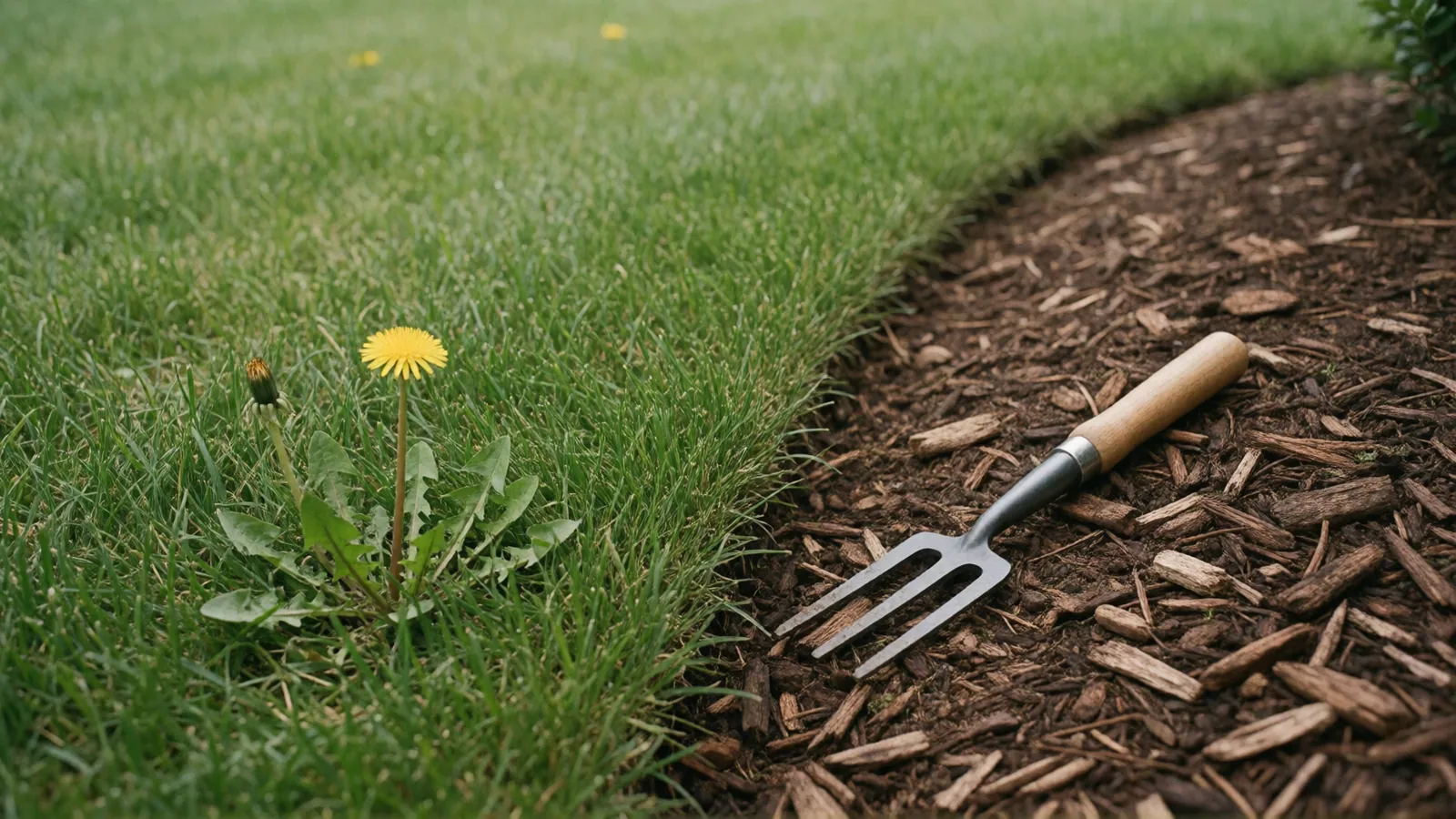
AI-generated illustration. Not a real home or business.
Ask most lawn companies what they do about weeds and they will describe a series of rounds: something in early spring for crabgrass, something in summer for dandelions and clover, something in late summer for grubs. This company has none of that. It isn't because weeds don't matter. It is because of a definition in New York law, and because of what actually keeps weeds out of a lawn.
A weed is a pest, in law
New York's Environmental Conservation Law starts from a definition that surprises most people: a pest includes any weed, a weed is any plant growing where it is not wanted, and a pesticide is anything meant to prevent, destroy or repel a pest.
So a product sold to stop dandelions is a pesticide, and so is one sold as natural or organic, whatever it is made from. What decides it is what the product is for. Everything that follows in the law, from who may apply it to who has to be told, applies to all of them alike.
No pesticide of any kind. We don't apply weed killers, crabgrass preventers, grub, tick or mosquito controls, or any other pesticide, including the ones sold as natural or organic. In New York a weed is a pest in law, so all of those need a State-registered business, a certified applicator, a written contract naming the products, warning flags on the lawn and, in Nassau County and New York City, written notice to your neighbors forty-eight hours before. We feed, seed, aerate and mulch, and we pull and cut weeds by hand and by machine.
- N.Y. Environmental Conservation Law § 33-0101 (opens the source in a new tab) A pest includes any weed, a weed is any plant growing where it is not wanted, and a pesticide is anything meant to prevent, destroy or repel a pest.
- N.Y. Environmental Conservation Law § 33-0905 (opens the source in a new tab) Anyone who applies pesticides commercially in New York must be certified by the State, or work under the direct supervision of someone who is.
- 6 NYCRR 325.23 (opens the source in a new tab) A business offering, advertising or providing commercial pesticide application must be registered with the State.
- Nassau County Miscellaneous Laws Title 43 (opens the source in a new tab) In Nassau County, neighbors are given written notice forty-eight hours before a commercial lawn pesticide application.
A company that applies those products carries all of that. This one, a demonstration, is built to show what a lawn company that applies none of them looks like, and to argue that the lawn doesn't have to suffer for it.
What keeps weeds out
Most lawn weeds are opportunists. Crabgrass is an annual: it dies with the first frost and comes back every year from seed, and that seed needs light and warm bare soil to sprout. Dandelions, plantain and clover move into thin turf wherever there is room. A lawn that is dense and mowed tall leaves them very little of either, and that is the whole approach here, in four parts.
Thick turf
Core aeration and overseeding at the end of summer fill the gaps a weed would use. A lawn thickened two falls running has much less bare soil showing in spring than one left alone.
Height
Mowed at three inches and more, grass shades the soil, and crabgrass seed sitting in the shade mostly stays where it is. Mowed short, the lawn opens the ground to it every week.
Feeding inside its dates
Feeding builds turf that fills in, and fall is when a cool-season lawn does most of that filling. A season plan can carry four feeding rounds: late April, early June, early September and late October. Each rides on that week's visit and is its own line on that visit's invoice.
Hands and machines
The weeds that get through are pulled or cut. A tall weed along a fence line, cut before it seeds, is next year's patch that never comes up.
The dates are the law's. New York doesn't allow lawn fertilizer between December 1 and April 1, and Nassau County not between November 15 and April 1. We hold every address to the Nassau window, so no feeding round is ever applied before April 2 or after November 14.
Pulling weeds that stay pulled
Hand weeding works when it gets the root. A dandelion grows from a long taproot, and a piece left in the ground grows a new plant; a forked weeder pushed down beside the root and levered back brings it out whole. Pull after a rain, when the soil lets go, and pull before the flowers turn to seed heads, because one seed head is the next spring's patch.
In the beds, mulch does most of the work. Weed seeds that need light to sprout don't get it under a layer of shredded bark, and the few that do come up pull out of loose mulch easily:
Keep mulch two inches deep and pulled back from the stems.
Clover is worth a second look before it goes. It stays green in a dry spell, it takes nitrogen from the air and leaves some in the soil, and the bees work it all summer. Plenty of people now leave it in.
Bare patches are the real problem
A weed in a lawn is usually a sign of a bare patch that came first: a spot worn by the dog, scorched by a car's exhaust, shaded by a new fence or washed out by the downspout. Fix the cause where you can, then rake the patch and seed it at the end of summer. Until it fills, the weeds will keep coming back to the same place, whatever goes on it.
A dense lawn still has a few weeds in it. What changes is that they stay a few.
What we promise. We don't guarantee a result: a lawn is weather, shade, soil and the dog. What we promise is the work on the agreement, done the way it says, and a written record of each visit.
Start with an estimate visit
Book an estimate visit, at least twenty-four hours ahead. There's no charge for it, and nothing has to follow it.