A demonstration site — this company, its crews and its customers are not real.
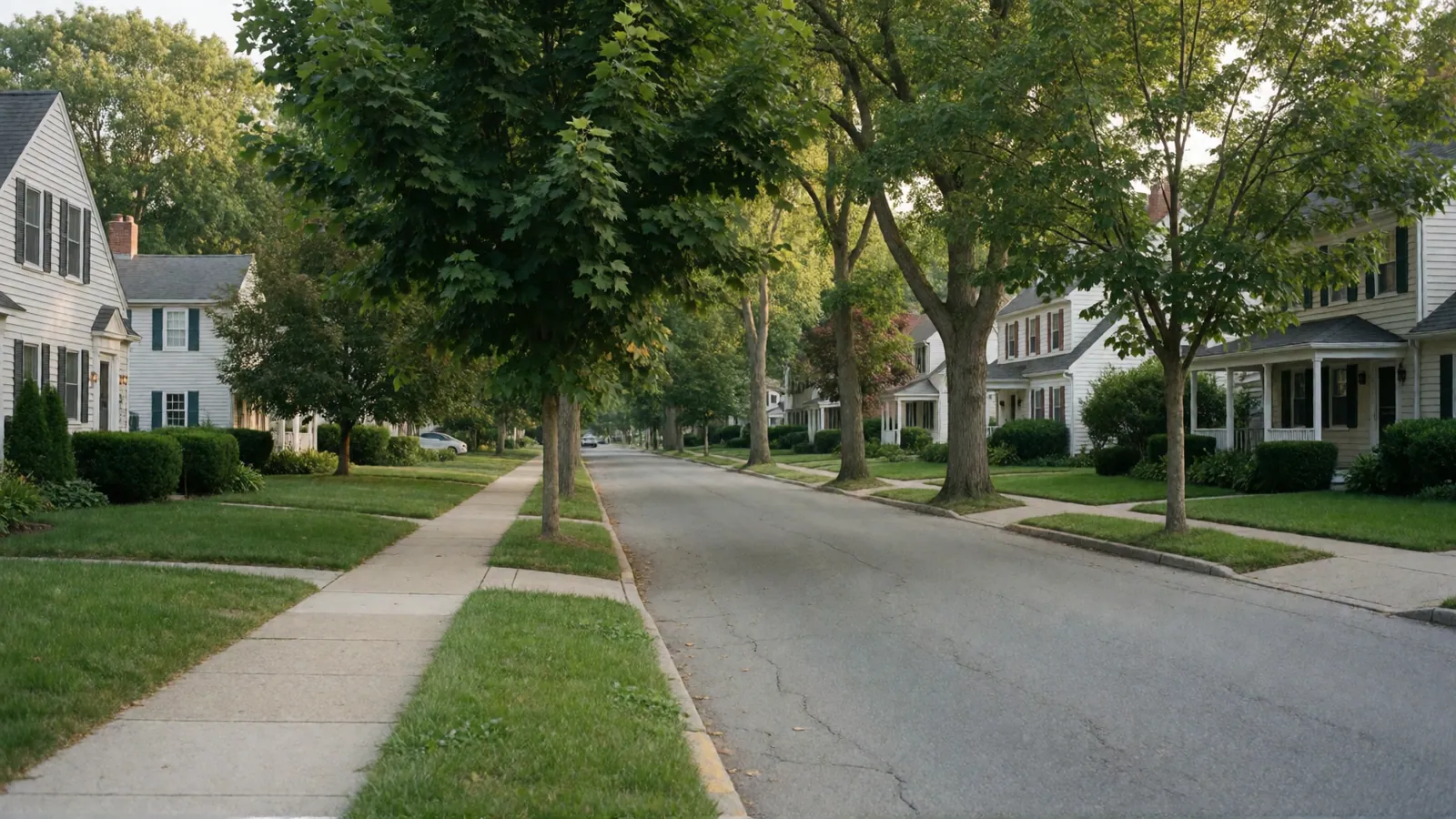
A quiet tree-lined residential street with a sidewalk and a grass strip, colonial houses with shutters behind lawns and shrubs.

About

Eleven places, both sides of the Queens line

Seven places in Nassau County and four in eastern Queens, by ZIP code, from a yard on Denton Avenue in New Hyde Park.

AI-generated illustration. Not a real home or business.

Eleven places, by ZIP code

The booking form reads the ZIP code first, and offers estimate visits for an address on this table and no other.

The places we work, by ZIP code, and the sales tax there. An address outside them is for the telephone.
PlaceZIP codeCountySales tax
New Hyde Park and Garden City Park11040Nassau County8.625%
Mineola11501Nassau County8.625%
Williston Park11596Nassau County8.625%
Garden City and Stewart Manor11530Nassau County8.625%
Floral Park11001Nassau County8.625%
Franklin Square11010Nassau County8.625%
Elmont11003Nassau County8.625%
Glen Oaks11004New York City (Queens)8.875%
Bellerose11426New York City (Queens)8.875%
Little Neck11362New York City (Queens)8.875%
Douglaston11363New York City (Queens)8.875%

Every visit is at your address, from the yard on Denton Avenue in New Hyde Park. If you were looking for lawn care in New Hyde Park, a landscaper in Garden City, landscaping in Floral Park or a lawn service in Mineola, Williston Park, Franklin Square or Elmont, or lawn care in Little Neck, Douglaston, Bellerose or Glen Oaks, these are the streets the four crews work.

The estimator on this site prices lots from 1,000 square feet to 25,000 square feet. A larger lot, and an association's or a business's grounds, are priced at the estimate visit.

Seven places in Nassau County

Sales tax here is 8.625%, added to each invoice as its own line.

  • New Hyde Park and Garden City Park, 11040

    Where the yard is, in Garden City Park, a hamlet of the Town of North Hempstead; the village of New Hyde Park sits on both sides of its town line. Capes, high ranches and colonials on narrow lots that run deep from the street: a short front lawn, a driveway down one side, and most of the grass behind a side gate, which is where the narrow mower earns its place. The worked example for a spring clean-up on its own is a house here on a lot of 6,000 square feet. On Desmond's route.

  • Mineola, 11501

    A village of older houses close to the street on narrow lots, with big street trees, and wider lots with larger houses toward its edges. A small front lawn means the edging along the walk and the curb is a large share of each visit, and the part of it everybody sees. The worked example for a full season, with feeding and sprinklers, is a house here on a lot of 6,000 square feet, on a Tuesday route. On Lucía's route.

  • Williston Park, 11596

    A small village of closely set houses on narrow lots, many with a garage at the back of the driveway and the lawn split between a strip in front and a fenced yard behind. The crew goes through a gate at most stops, so the latch matters as much as the mower. On Lucía's route.

  • Garden City and Stewart Manor, 11530

    Garden City has some of the widest and deepest lots in the area, under tall old trees, which makes its fall leaf visits long ones and its beds large. It is one of the villages that license landscapers themselves, and it has its own summer leaf-blower ban, which is one reason every blower and trimmer here is battery-powered. Stewart Manor, beside it on the same ZIP code, is a smaller village of closer-set houses. The worked example for aeration and overseeding is a lawn here of 10,000 square feet. On Lucía's route.

  • Floral Park, 11001

    A village of Tudors, capes and colonials on narrow lots, front lawns behind low hedges and walks that run straight from the sidewalk to the door. A small lot is a short visit, and a weekly visit is often all it needs: the worked example for weekly visits only is a house here on a lot of 4,000 square feet, on a Monday route. ZIP 11001 also reaches into Queens. We work its Nassau side only: the Village of Floral Park, South Floral Park and Bellerose Village. On Kwabena's route.

  • Franklin Square, 11010

    Capes and ranches on regular lots, many with a front lawn that runs right to the sidewalk and a fenced yard behind. A lawn that meets the sidewalk has its sidewalk edge cut on every visit, the line a passer-by sees. One of the two snow contract examples is a single-car driveway here. On Kwabena's route.

  • Elmont, 11003

    Capes, ranches and two-story houses on regular lots along the Queens line, front lawns to the sidewalk and back yards behind fences. It is the last stop in Nassau before the routes cross into Queens: a front lawn, a back lawn and a gate between them, the weekly visit in its plainest form. On Kwabena's route.
Four places in eastern Queens

Sales tax here is 8.875%, the New York City rate, added to each invoice as its own line.

  • Glen Oaks, 11004

    At the eastern edge of Queens, against the Nassau line: brick and frame houses with small front lawns, and garden-apartment co-ops with long shared lawns between the buildings. A house is priced from its lot on the estimator; a co-op's grounds are walked with the board and quoted in writing. The two-car snow contract example is a house here. On Marguerite's route.

  • Bellerose, 11426

    The Queens side of a name that carries on across the county line: brick and frame houses, many semi-attached, on smaller lots, with short front lawns, narrow side yards and a back yard reached through a gate. On Marguerite's route.

  • Little Neck, 11362

    Where Queens meets the Great Neck peninsula: colonials and capes on some of the larger lots on the Queens side, many on a slope, with old trees and long beds along the front. The worked example for a season with clean-ups is a corner lot here of 8,000 square feet, on a Thursday route; a corner lot has twice the edging, which is why it takes a tenth longer. On Marguerite's route.

  • Douglaston, 11363

    A neighborhood on Little Neck Bay with some of the largest lots in the area on the Queens side, hilly streets, old trees, and planting beds as large as the lawns. A visit here is as much the beds and the leaves as the mowing, and a garden plan is as often the first question as the lawn. On Marguerite's route.

What changes at the Queens line

The same crews and the same visit on both sides. Four things on the paperwork differ.

The sales tax

Every price here is before sales tax, which is added to each invoice as its own line at the rate where the work is done: 8.625% in Nassau County and 8.875% in Queens. In New York, mowing, clean-ups, feeding, sprinkler visits and snow removal are taxed as services to a property.

One more notice on the agreement

A season plan or a snow contract for a Queens address carries New York City's notice for a contract of services over time, printed on the agreement. Nothing here is paid in advance, so it changes nothing you pay.

Whose license a real company needs

In Nassau County a landscaper needs the County's home improvement license even to mow lawns, and prints its number in every ad; in New York City, building a patio, a garden wall, a planting bed or a sprinkler system needs the City's home improvement contractor license. This is a demonstration company: it holds no license, so no number is shown, and nothing here is an offer of work.

The sidewalk after snow

Clearing the public sidewalk is the property owner's duty in law. In New York City and the Town of North Hempstead it has to be clear within four daytime hours after the snow stops, and the owner answers for an uncleared sidewalk. What a snow contract changes, and what it can't.

Villages, towns and their own rules

Some villages license too. Some villages license landscapers themselves as well — Garden City requires its own license and a decal on every truck — so a real company working there holds each village's license too.

Every blower and string trimmer we use is battery-powered, which is why no summer leaf-blower ban stops a visit. Garden City has one from the Saturday before Memorial Day to Labor Day, and the Town of North Hempstead another from June 15 to September 15.

Fall leaves are blown off the lawn, the beds and the walks and bagged, or piled at the curb where your town or village collects them in the fall; if you'd like them hauled away, the office quotes it. When and how that collection runs is for your town or your village to decide, and it differs from one to the next.

Where we don't work

Places we don't work. We don't work on schools, parks, or property a town, a village, the County or the City owns: those are bid out by public contract.

We don't take lawns outside the eleven places on this page. An address outside the table is for the telephone.

Contact the office

The rules this page follows

Each is described in a sentence of its own.

Start with an estimate visit

Book an estimate visit, at least twenty-four hours ahead. There's no charge for it, and nothing has to follow it.