How the work is done
Before a machine digs
The call to 811 comes after your three business days, and the first machine digs two full working days after the call. A spade needs no call.
AI-generated illustration. Not a real home or business.
Hand tools, or a machine
811 before a machine digs. Before any machine digs, we call 811 so the utilities can mark their lines, and New York has us wait two full working days after the call. Planting with spades and shovels needs no call.
The law draws the line at the machine, not at the depth. Digging with a spade, a shovel or a mattock is not excavation, so a shrub planted by hand waits for no call.
A patio's base, a garden wall's footing or a trench for a new sprinkler line is a different job: it is dug by machine, it goes down further and across more ground, and a machine doesn't feel a pipe before it reaches it. Every one of those waits for the call, and for the marks.
The dates, on a worked example
A patio contract, signed on the same morning as the season plans in the other examples.
Signed: Thursday, March 4, 2027
A patio contract, signed at home after the estimate visit. Nothing is delivered, marked or dug yet.
The three business days end: Monday, March 8, 2027
At midnight. Until then you can cancel and owe nothing, and the call to 811 waits too, because nothing is marked on your property before then.
The call to 811: Tuesday, March 9, 2027
The first working day after the three days. The utilities are told where the digging will be, and they send someone to mark their lines.
The first machine digs: Friday, March 12, 2027
After two full working days, not counting the day of the call: the shortest wait the State's rule allows.
Nothing for three days. Nothing is delivered, marked or dug before your three business days are over, so the 811 call comes after them too.
Quoted in writing. Planting, a patio, a garden wall and a new sprinkler system are quoted in writing after an estimate visit, on a home improvement contract that names the work, the materials, the price, the start and completion dates and the stages of payment.
What the marks look like
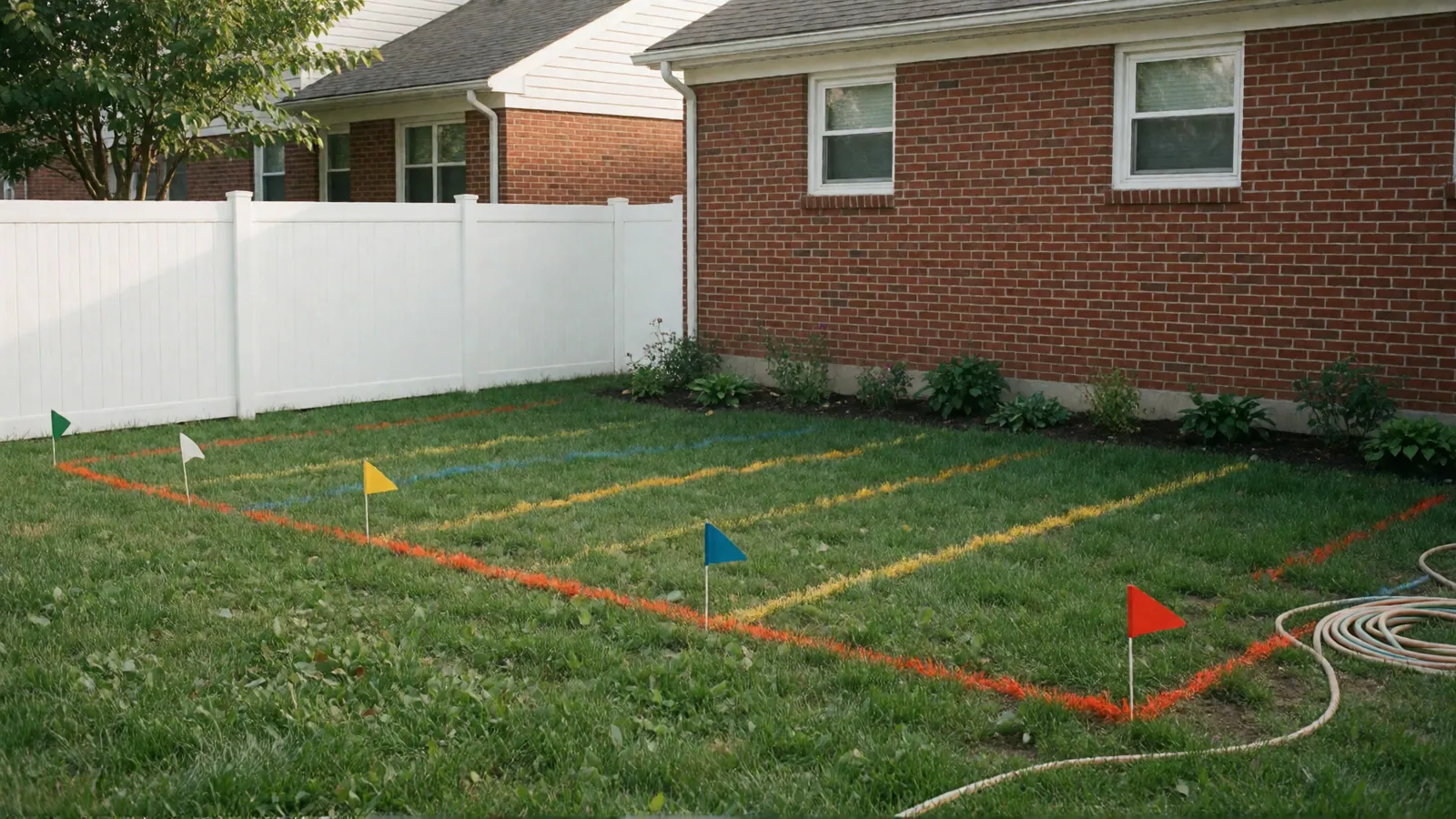
A utility marks its line with paint on the grass and the pavement, and with small flags on stakes where paint won't show. Each kind of utility uses its own color, so a line of one color across the lawn says what runs underneath it: the color for gas is not the color for water. Leave the marks where they are until the work is done.
A mark shows where a line runs, not how deep it is, and it is as exact as the record behind it, no more. Near a mark, a careful contractor digs the last of it by hand.
What nobody marks
The utilities mark the lines they own. What the house owns, put in later, nobody comes to mark: the sprinkler lines, a cable out to a lamp post or a garage, a gas line to a grill, an old oil tank's fill pipe, a drain from the downspouts. The person who knows where they are is usually you.
That is why the list for the estimate visit says “Tell us about anything underground you know of: sprinkler lines, a buried cable to a lamp post, an old oil tank fill.” Once the weekly visits start, the mower needs the same: “Tell us about anything a mower must not hit: a buried wire, a flat stone, a drain cover in the grass.”
The rules this page follows
Each is described in a sentence of its own.
- N.Y. General Business Law § 760 (opens the source in a new tab) Excavation means moving earth with machinery, and digging with hand tools is not excavation.
- 16 NYCRR 753-3.1 (opens the source in a new tab) An excavator gives notice to the one-call center at least two and not more than ten working days before digging, not counting the day of the call.
- 6 RCNY § 2-223 (opens the source in a new tab) A New York City home improvement contractor makes no physical change and does no work until the three-day cancellation period has passed.
- Nassau County Home Improvement Regulation 7 (opens the source in a new tab) A Nassau contractor gives the notice of cancellation in triplicate and may not begin work or deliver goods until three days after signing.
Start with an estimate visit
Book an estimate visit, at least twenty-four hours ahead. There's no charge for it, and nothing has to follow it.