A demonstration site — this company, its crews and its customers are not real.
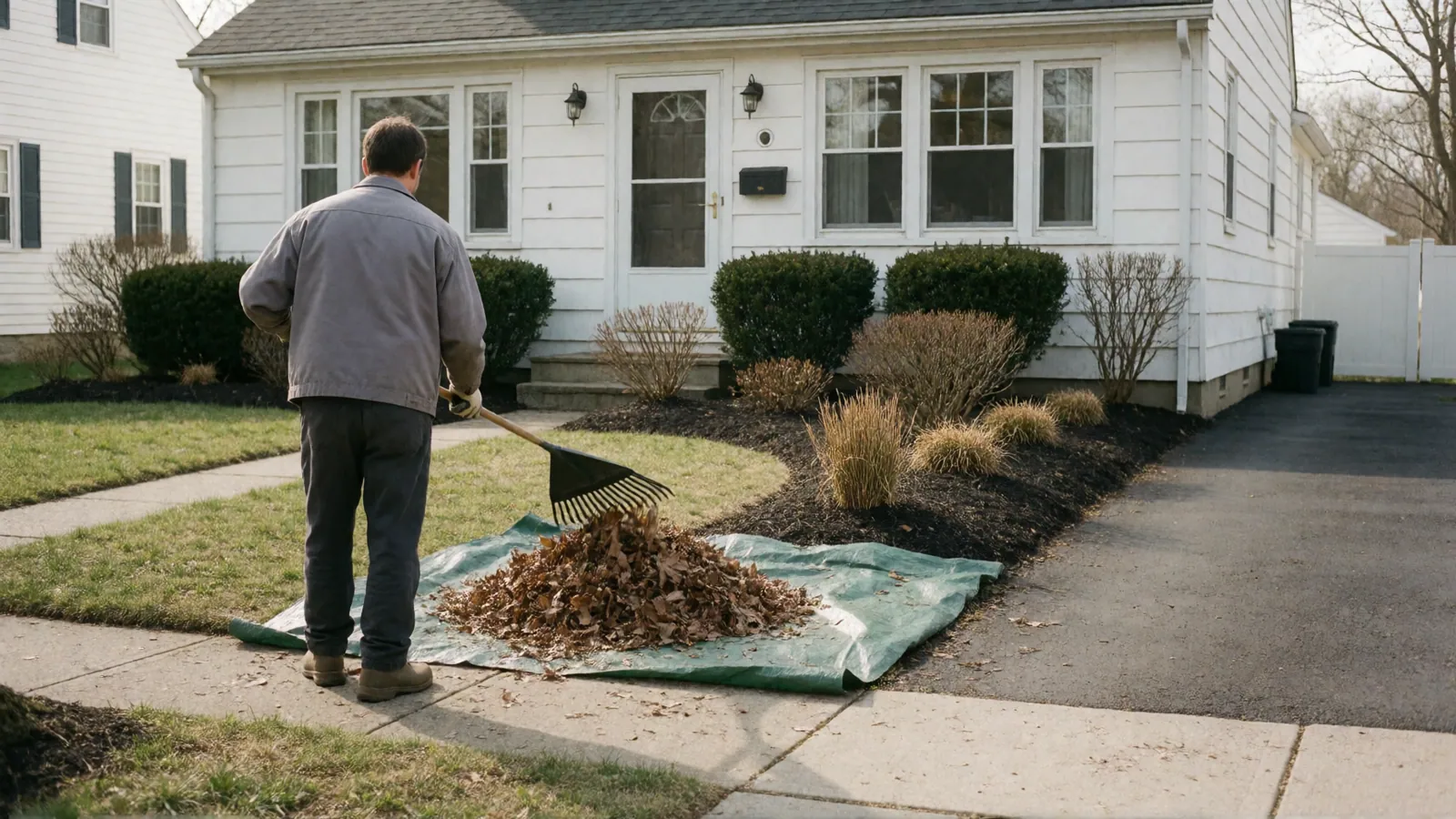
A crew member seen from behind in a gray jacket, work gloves and boots, raking dry leaves onto a green tarp on a front lawn in early spring, a white house behind.

The lawn

A spring clean-up to start the year, two leaf visits to end it

Beds cleared and edged in April, and leaves off the lawn twice in November, on a season plan or on their own.

  • Spring clean-up, $175 to $775
  • Two leaf visits, from November 1

AI-generated illustration. Not a real person, home or business.

The spring clean-up

On a season plan it's the first visit, on the first route day from April 1. On its own it's a one-off job on a weekday from March 16 to May 15.

What the visit is. Leaves and winter debris out of the beds and the lawn, beds re-edged, grasses and perennials cut back, shrubs shaped, and the first cut of the year.

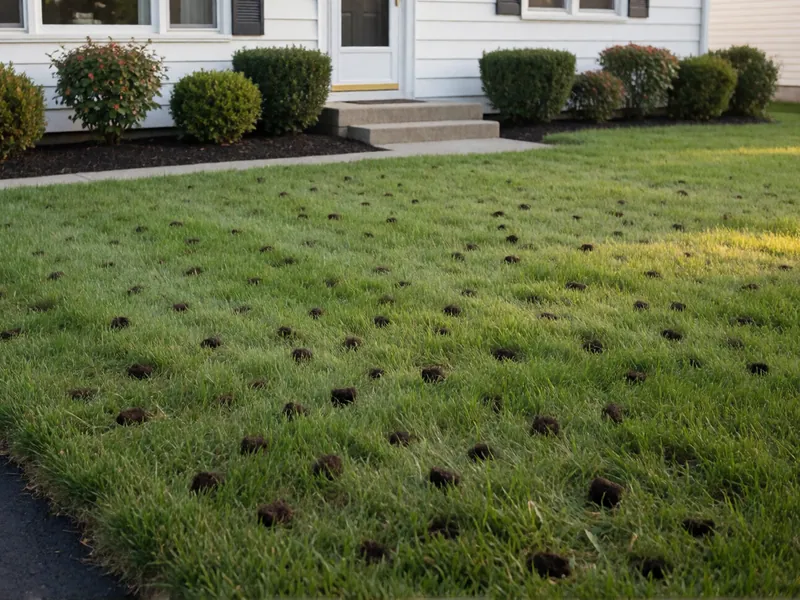
The leaves that blew into the beds and the corners after the last fall visit come out first. A mat of wet leaves on a lawn at the end of winter keeps the crowns of the grass dark and damp, which is where the gray, matted patches of snow mold come from.

The beds are re-edged with a spade: a clean, vertical cut between the lawn and the bed that keeps the grass from creeping in and gives the mulch something to stop against. The ornamental grasses and the perennials left standing over the winter are cut to the ground before the new shoots come up through them; a couple of weeks late, and the new growth is cut off with the old.

Shrubs are shaped lightly and the winter damage taken out. It isn't the season to cut back anything that flowers in spring, which would take this year's buds with the trimmings. And the lawn gets its first cut of the year, which is why, on a season plan, the clean-up takes the place of that week's visit.

  • Two leaf visits, because the maples drop in October and the oaks hold on into November.
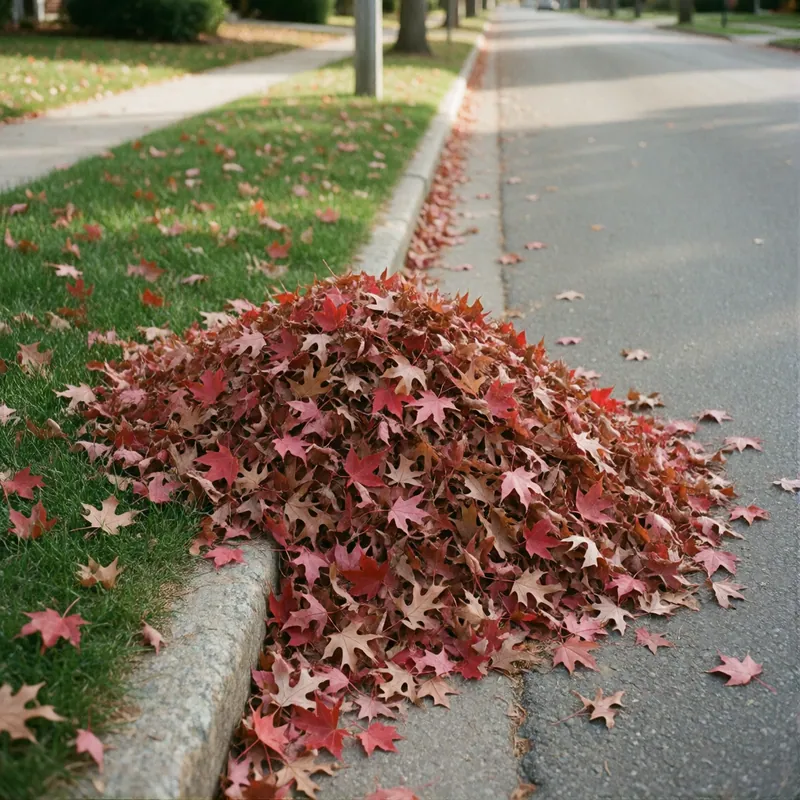
  • Leaves are bagged, or piled at the curb where your village collects.
A pile of raked red and orange leaves on the grass strip at a curb, the street beyond.AI-generated illustration. Not a real home or business.

The fall: two leaf visits, because the trees don't drop together

Most yards here sit under more than one kind of tree, their own or the street's. The maples let go first, nearly all at once. The oaks, the pin oaks most of all, hold their brown leaves long after the maples are bare and drop them over weeks.

One clean-up timed for the maples leaves the oaks' whole crop on the lawn for the winter; one timed for the oaks leaves the maples' leaves matted on the grass for weeks first. So a season plan carries two leaf visits, on the first route days from November 1 and November 15, and on their own they can be booked on a weekday from October 20 to December 15.

A lawn that goes into winter under wet leaves comes out of it thin and patchy: grass needs the light of the short fall afternoons to store what it lives on until spring.

What a leaf visit is. Leaves blown off the lawn, the beds, the walks and the patio and bagged or piled at the curb, beds cleared, perennials cut back, and that week's cut.

Each leaf visit takes the place of that week's weekly visit, cut included, so a leaf week on a season plan has no separate mow.

Where the leaves go. Fall leaves are blown off the lawn, the beds and the walks and bagged, or piled at the curb where your town or village collects them in the fall; if you'd like them hauled away, the office quotes it.

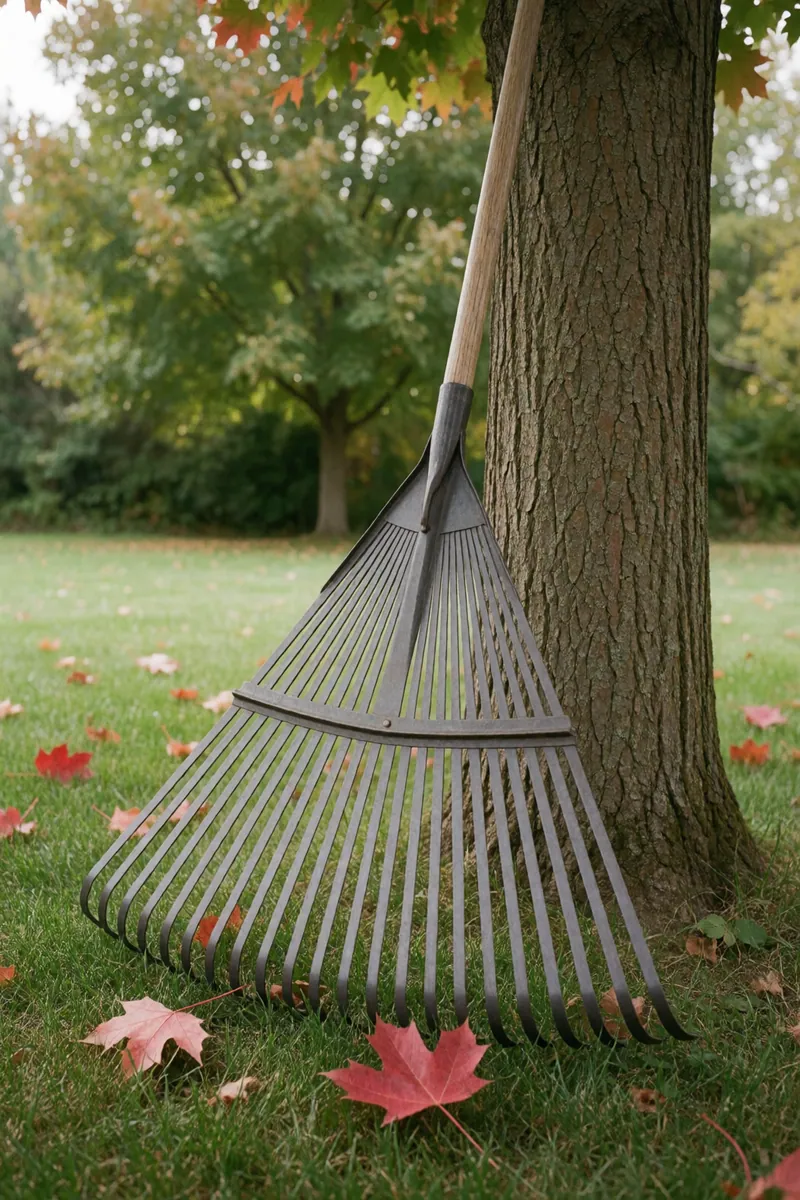
A leaf rake with steel tines leaning against a tree trunk, a few red leaves on the lawn.AI-generated illustration. Not a real home or business.

Lucía Ferreira-Doyle

Crew lead, route C2

Runs the second crew's route through Mineola, Williston Park and Garden City.

Lucía plans the fall leaf visits street by street, by which trees drop first.

Lucía leaves every gate the way she found it, latched.
What a clean-up costs

Each priced from the size of the lot, the same way for every address, and the same on a season plan as on its own.

A clean-up on a weekday inside its window, before tax. Every price here is before sales tax, which is added to each invoice as its own line at the rate where the work is done: 8.625% in Nassau County and 8.875% in Queens.
The jobThe priceFor 6,000 square feetWhen
Spring clean-up$150, plus $25 for every thousand square feet of lot, rounded to the nearest five dollars$300March 16 to May 15
Fall leaf visit$175, plus $30 for every thousand square feet of lot, rounded to the nearest five dollars$355October 20 to December 15

Tax is its own line. Every price here is before sales tax, which is added to each invoice as its own line at the rate where the work is done: 8.625% in Nassau County and 8.875% in Queens. In New York, mowing, clean-ups, feeding, sprinkler visits and snow removal are taxed as services to a property.

A worked example

Worked out by the same arithmetic as a real agreement: every visit's date, its price and the sales tax on it. The household is invented.

A spring clean-up on its own A house in New Hyde Park

  • Spring clean-up, Tuesday, March 16, 2027an hour and forty-five minutes; tax $25.88$300.00
  • Before taxone visit$300.00
  • Sales tax (8.625%, Nassau County)on each visit's invoice$25.88
  • In allinvoiced visit by visit$325.88

Signed on Thursday, March 4, 2027. The three business days to cancel end at midnight on Monday, March 8, 2027, so the first visit is Tuesday, March 16, 2027.

Nothing paid up front. Nothing is paid on this website, and nothing is paid in advance. Each visit is invoiced after it's done, with the sales tax on its own line, and you pay by card, check or bank transfer.

The rest of the lawn

Book an estimate for spring and fall clean-ups

Book an estimate visit, at least twenty-four hours ahead. There's no charge for it, and nothing has to follow it.