A demonstration site — this company, its crews and its customers are not real.
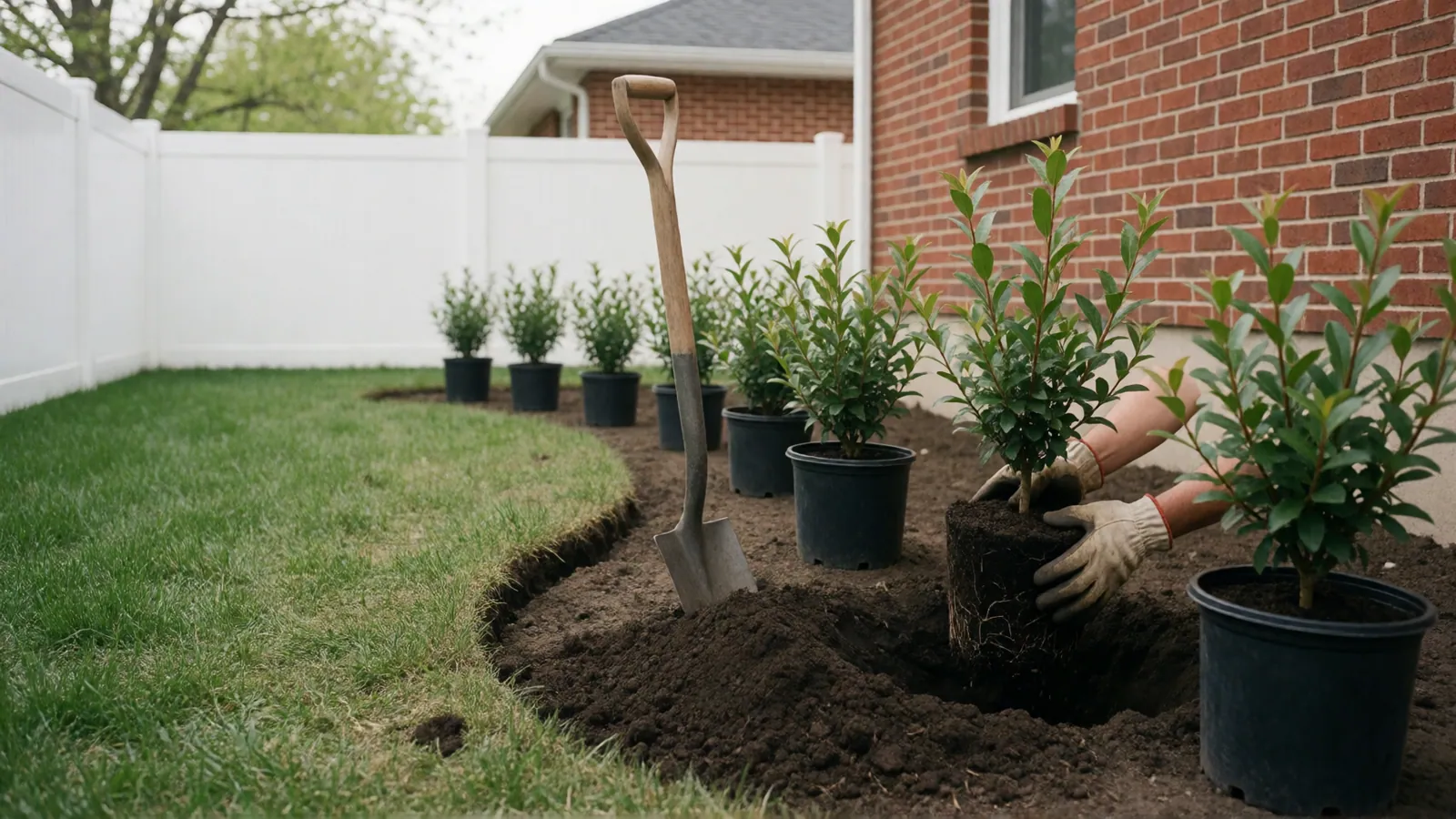
Gloved hands setting a young shrub with its root ball into a new curved bed cut into a backyard lawn, a spade standing in the soil and more young shrubs in plain black pots along a white vinyl fence.

The garden

A measured plan, native plants first, planted by our own crew

A measured plan and a plant list that starts with Long Island natives, planted by our own crew, quoted in writing.

  • Quoted in writing after the estimate visit
  • An estimate visit of about an hour

AI-generated illustration. Not a real person, home or business.

How a planting plan is made

It starts at the property, with you there. The estimate visit for a garden is the longer one, about an hour, and half of it is questions: who uses the yard and for what, what you'd like to stop doing in it, which window you look out of most.

Then the sun, because it decides the plant list before anything else does. A bed against a wall that faces south bakes all afternoon; one under a maple on the north side of the house gets an hour of light in the morning. Then the soil: much of western Nassau is sandy and drains in no time, while a lot that was regraded when the house went up can be packed fill. Then the water: where the downspouts empty, what runs off the driveway, which corner of the yard holds a puddle after rain.

What comes back is a plan drawn to scale from those measurements and a plant list that says what goes where. Spacing follows the size a plant will reach, not the size it arrives at, which is why so many foundation plantings here are a wall of shrubs pressed against the siding by the time the house is next painted.

A plan, then a planting. A garden design starts at the property: what's there, what gets sun, where the water goes. You get a measured plan and a plant list, and our own crew plants it.

A garden designer. We call the person who draws your plan a garden designer. In New York only someone the State has licensed may be called a landscape architect, or describe the work as landscape architecture.

  • Nothing from New York's invasive plant lists, ever.
  • A garden designer draws the plan.
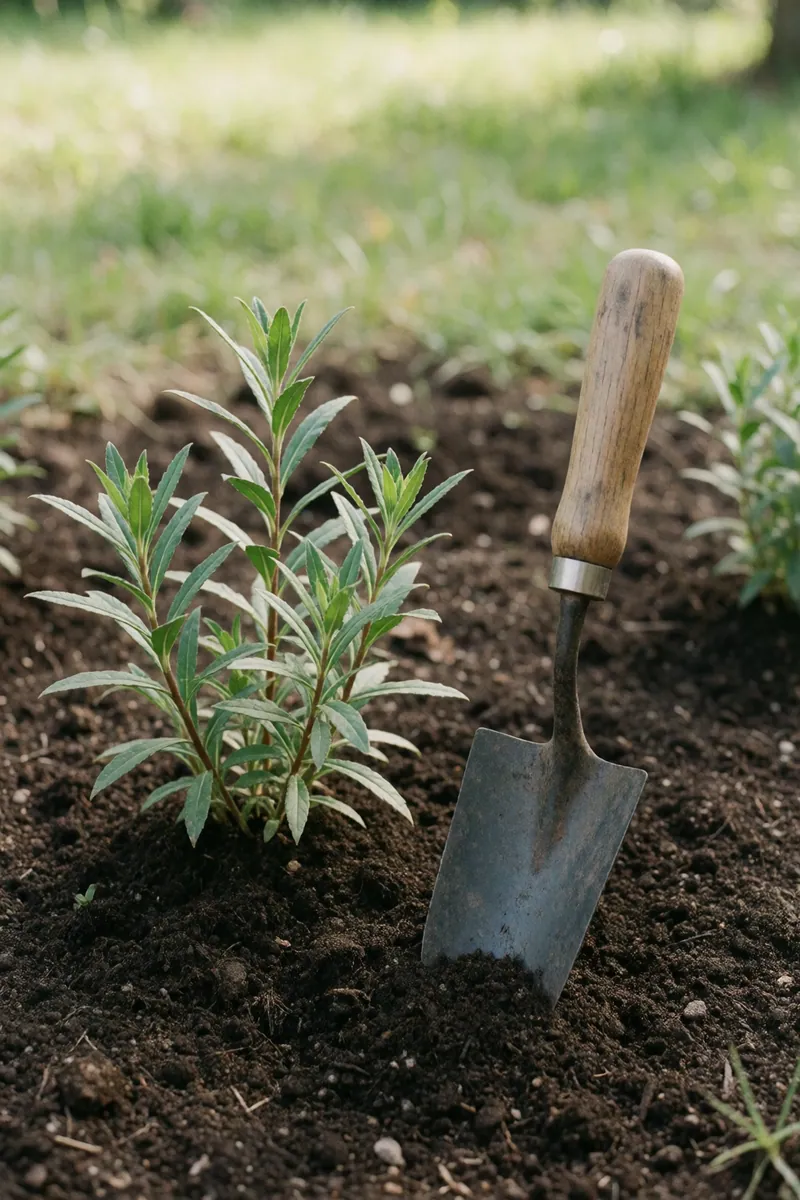
A wooden-handled garden trowel standing in dark soil beside a young perennial in a new bed.AI-generated illustration. Not a real home or business.

Teodora Vance-Mbeki

Garden designer

Draws the planting plans and lays out every bed before a spade goes in.

Teodora starts every plan with the sun: where it falls at nine, at noon and at four.

Her plant lists start with the natives that grow wild on this part of Long Island.
Natives first

Natives first, because they grew up here: in this soil, through these winters and the dry spell most summers bring. A plant suited to its spot needs less watering once it has rooted in, and less cutting back to keep its shape. The caterpillars that songbirds feed their young on mostly live on native plants, too.

These are the native shrubs and small trees that do the most work in a front yard here. The full list, with the perennials and the grasses, is on its own page.

  • Inkberry holly

    Shrub: an evergreen hedge or foundation shrub, where boxwood used to go.

  • Summersweet

    Shrub: late-summer flowers in a damp, part-shade bed.

  • Winterberry holly

    Shrub: red berries on bare branches all winter.

  • Arrowwood viburnum

    Shrub: a tall, loose screen along a back fence.

  • Bayberry

    Shrub: a tough, fragrant shrub for a sunny, sandy strip.

  • Serviceberry

    Small tree: white spring flowers and summer berries for the birds.

  • Eastern redbud

    Small tree: pink flowers on bare branches in April.

Natives first. We plant natives first — inkberry, summersweet, serviceberry, switchgrass, little bluestem — and well-behaved shrubs like hydrangea and boxwood, and we never plant anything on New York's list of prohibited or regulated invasive plants.

Some of the shrubs planted most often on Long Island can no longer be sold or planted in New York, and some others are regulated. None of them is on a plan we draw. If one is already in the yard, taking it out can be part of the job.

What New York no longer allows. Japanese barberry, border privet, the running bamboos, sycamore maple and Amur cork tree may not be sold or planted in New York at all, and Norway maple, burning bush and Chinese silver grass are regulated. We plant none of them, and we can take an old barberry or bamboo screen out.

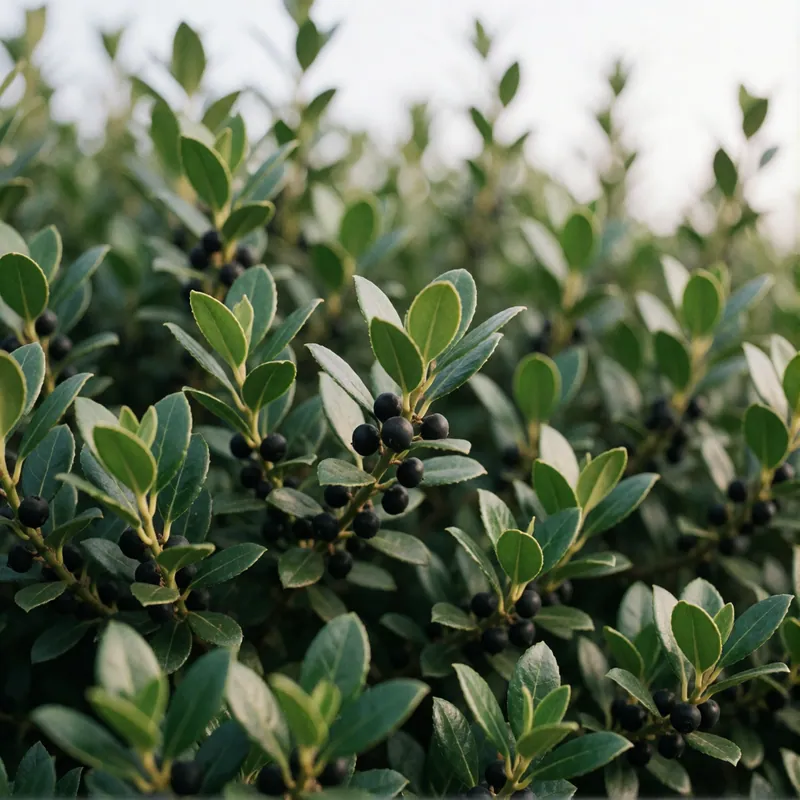
Close on an inkberry shrub, its small glossy evergreen leaves and black berries.AI-generated illustration. Not a real home or business.

Planting day

The beds are laid out on the ground before a spade goes in, so you can see their shape from the window before anything is dug. Then each hole is dug as deep as the root ball and two or three times as wide, so the roots grow out into loosened soil. The top of the root ball sits level with the ground or a little above it, never buried, because a buried stem rots. Roots circling the inside of a pot are teased out, the hole is filled back with the soil that came out of it, and each plant is watered in before the crew moves to the next.

Spring, once the ground has thawed and dried, and early fall, when the soil is still warm and the heat has gone, are the two planting seasons. A shrub planted in the middle of summer spends its first months getting through it rather than rooting in.

Planting with spades and shovels needs no call to the utilities. Anything a machine digs does.

811 before a machine digs. Before any machine digs, we call 811 so the utilities can mark their lines, and New York has us wait two full working days after the call. Planting with spades and shovels needs no call.

After that, the first season is yours, mostly with a hose. What to water, how often and how deep is on its own page.

Quoted in writing

There is no price for a garden on the rate card, because no two are the same size or the same plants.

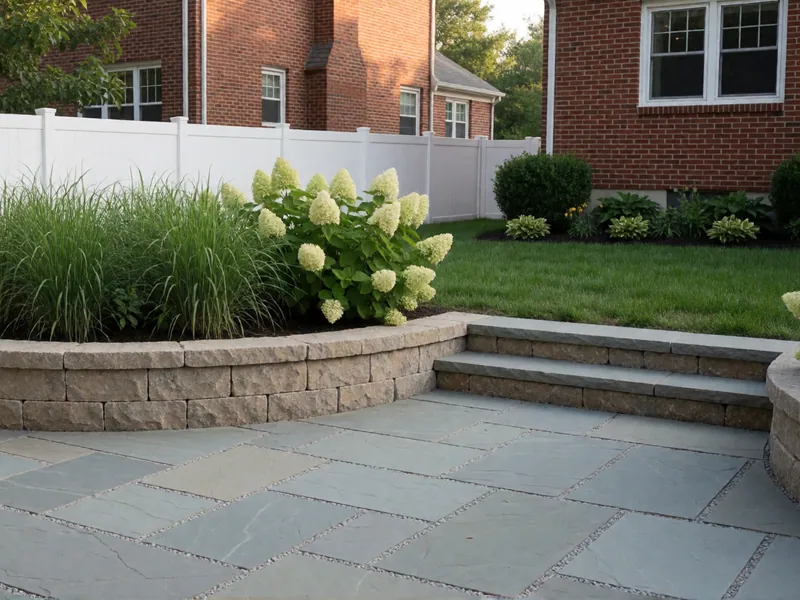
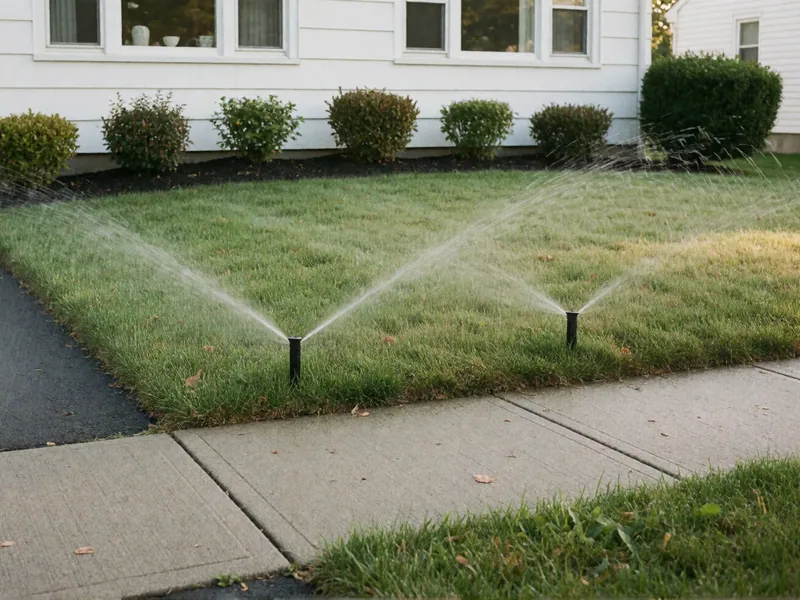
Quoted in writing. Planting, a patio, a garden wall and a new sprinkler system are quoted in writing after an estimate visit, on a home improvement contract that names the work, the materials, the price, the start and completion dates and the stages of payment.

No deposit. An install has no deposit. It is paid in stages written into the contract, each after the work it pays for, or on completion.

Installs are capital improvements. A new planting bed, a patio, a garden wall or a new sprinkler system is a capital improvement in New York: you sign the State's certificate and pay no sales tax on the job, and the price already carries the tax we paid on the materials.

Nothing for three days. Nothing is delivered, marked or dug before your three business days are over, so the 811 call comes after them too.

Gardens, sprinklers and snow

Book an estimate for planting and garden design

Book an estimate visit, at least twenty-four hours ahead. There's no charge for it, and nothing has to follow it.