A demonstration site — this company, its crews and its customers are not real.
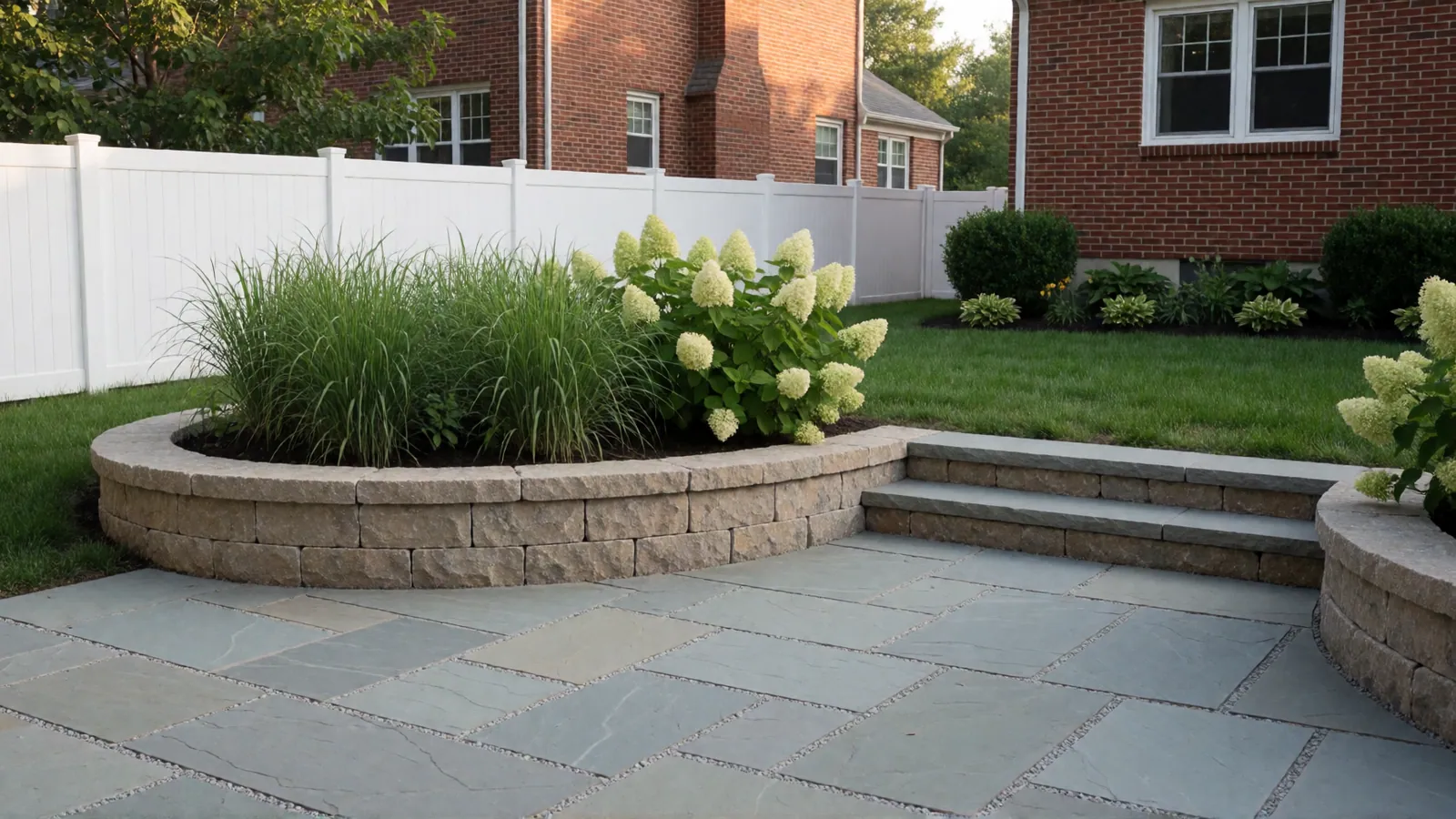
A backyard patio of gray bluestone with narrow gravel joints, two stone steps up to the lawn and a low curved wall of tan block around a bed of tall grasses and white panicle hydrangeas.

The garden

Patios, walks and garden walls, built on a base that lasts

Paver and bluestone patios, walkways, steps, bed edging and garden walls up to three feet, on a written contract.

  • Quoted in writing after the estimate visit
  • An estimate visit of about an hour

AI-generated illustration. Not a real home or business.

Why patios sink, and how ours are built

A patio that rocks underfoot, or holds a puddle by the back door, was nearly always built on too little base. The pavers or the stone are the part you see; what decides how the patio looks after a run of winters is underneath it.

  1. Dig out

    The topsoil and the roots come out, down to firm subsoil, and the dig runs past the edges of the patio so the base reaches beyond the last paver.

  2. The base, in layers

    Crushed stone goes in a few inches at a time, and each layer is compacted with a plate compactor before the next goes on. A base dumped in one deep layer and compacted once is hard on top and loose underneath.

  3. The pitch

    The base is graded to fall away from the house: a slope too slight to see, but not to the rain, so water runs off the patio and away from the foundation.

  4. Bedding and laying

    A thin bed of sand is screeded flat over the base and the pavers are laid on it in their pattern, cut to fit at the edges. Bluestone is set piece by piece, each one leveled to its neighbors.

  5. Edges and joints

    An edge restraint is fixed along every open side so the pavers can't creep outward, the joints are swept full of polymeric sand, and the surface is compacted once more to lock them together.

A front walk is the same build, narrower. It is laid wide enough for two people side by side, and steps are built with every riser the same height, because the one step a little taller than the others is the one people trip on.

  • We call 811 before any machine digs.
  • Walls up to three feet; no driveways or public sidewalks.
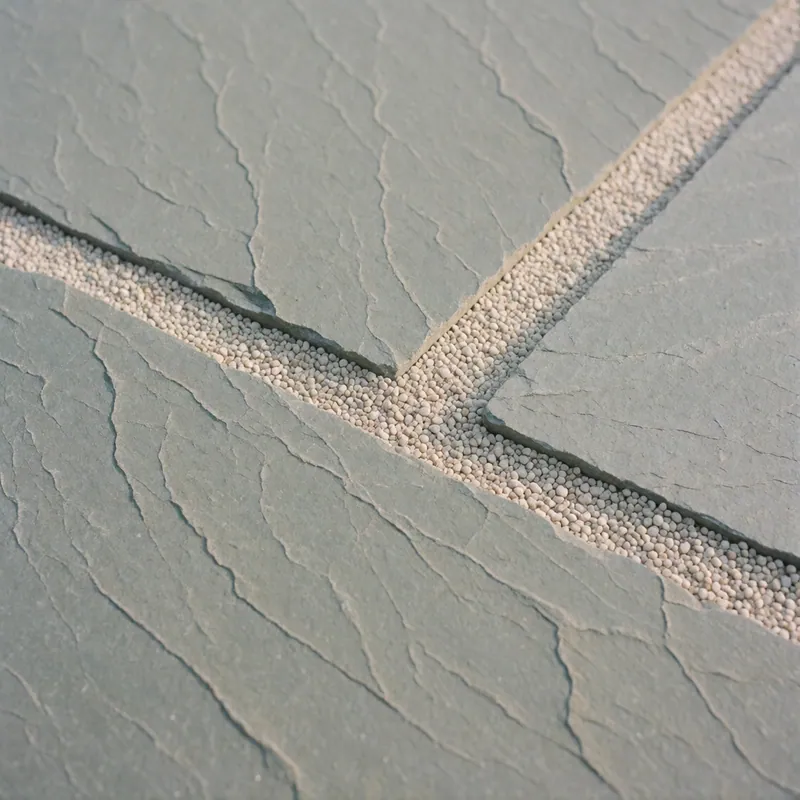
Close on the joints between bluestone paving slabs, filled with fine light gravel.AI-generated illustration. Not a real home or business.

Garden walls, and where we stop

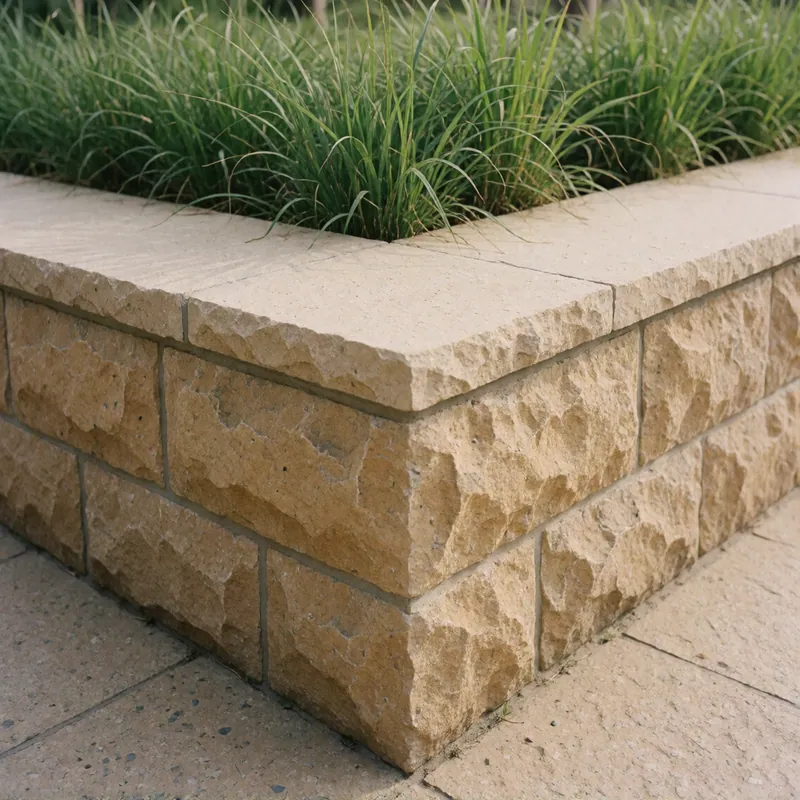
A garden wall or a low retaining wall is built of block or stone on the same compacted base as a patio, with its first course set below the ground so it can't slide. Behind it goes clean drainage stone with a perforated pipe at its foot, because what pushes a retaining wall over is rarely the soil itself: it's the water in the soil after a week of rain, and the frost in it in winter. Each course steps back a little from the one below, so the wall leans into the slope it holds.

Driveways, curbs, the public sidewalk and taller walls are a different scale of work, and we leave them to the contractors who build them.

Up to three feet. We build patios, walkways and steps in pavers or bluestone, edge planting beds, and build garden and retaining walls up to three feet. Driveways, public sidewalks, curbs and taller walls are for a contractor who builds those.

The corner of a low wall of tan rough-textured block with a smooth cap, a bed of fine upright grass behind it.AI-generated illustration. Not a real home or business.

Before anything is dug

A patio is dug with a machine, and before any machine digs, the utilities come and mark their lines on the ground: gas, electric, water, telephone and cable, each in its own color of paint or flag. Nothing is marked, delivered or dug before your three business days to cancel are over, so the call comes after them, and then the wait the law sets before the first machine starts.

This is what that calendar looks like, worked out for an example contract:

A worked example. A patio contract signed on Thursday, March 4, 2027: the three business days end at midnight on Monday, March 8, 2027; the 811 call is made on Tuesday, March 9, 2027, and the first machine digs on Friday, March 12, 2027.

811 before a machine digs. Before any machine digs, we call 811 so the utilities can mark their lines, and New York has us wait two full working days after the call. Planting with spades and shovels needs no call.

Nothing for three days. Nothing is delivered, marked or dug before your three business days are over, so the 811 call comes after them too.

Quoted in writing, on a home improvement contract

The estimate visit for a patio is the longer one, about an hour, and you'll want to be there for it: where the table goes, which door the plates come out of, where the grill smoke drifts on a summer evening, where the snow from the roof lands. The area is measured, the slope of the ground read, and the office writes the quote.

Quoted in writing. Planting, a patio, a garden wall and a new sprinkler system are quoted in writing after an estimate visit, on a home improvement contract that names the work, the materials, the price, the start and completion dates and the stages of payment.

No deposit. An install has no deposit. It is paid in stages written into the contract, each after the work it pays for, or on completion.

Installs are capital improvements. A new planting bed, a patio, a garden wall or a new sprinkler system is a capital improvement in New York: you sign the State's certificate and pay no sales tax on the job, and the price already carries the tax we paid on the materials.

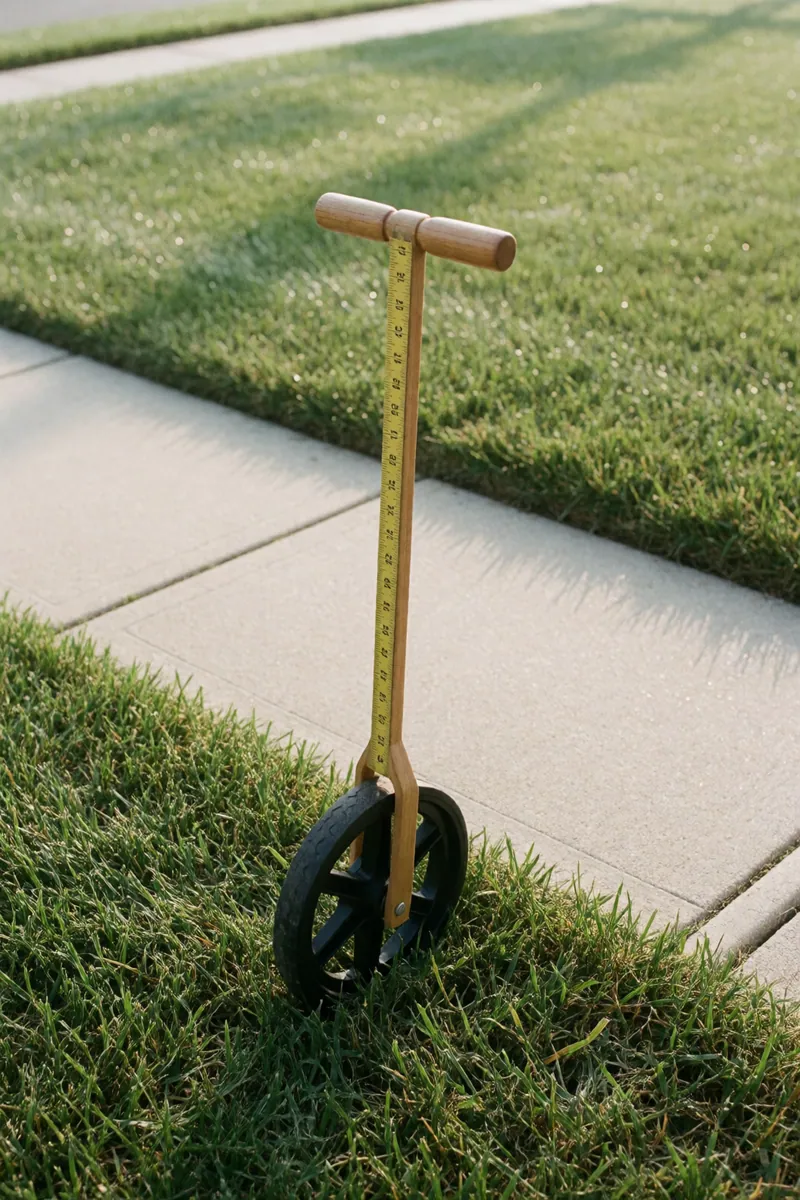
A measuring wheel with a wooden T handle standing on a lawn beside a concrete walk.AI-generated illustration. Not a real home or business.

Rafferty Quaye-Lindqvist

Owner and estimator

Walks every lot before a price is written, and sets the routes.

Rafferty measures a lawn with a wheel, not a satellite picture, and counts the gates while he does it.

Rafferty puts neighbors on the same route day, so a crew parks once for three lawns.
Gardens, sprinklers and snow

Book an estimate for patios, walkways and garden walls

Book an estimate visit, at least twenty-four hours ahead. There's no charge for it, and nothing has to follow it.