The journal
A seasonal snow contract or paying per storm?
What a fixed season price buys in a light winter and a heavy one, what a contract should say about the sidewalk, and why it has to be signed before the snow comes.
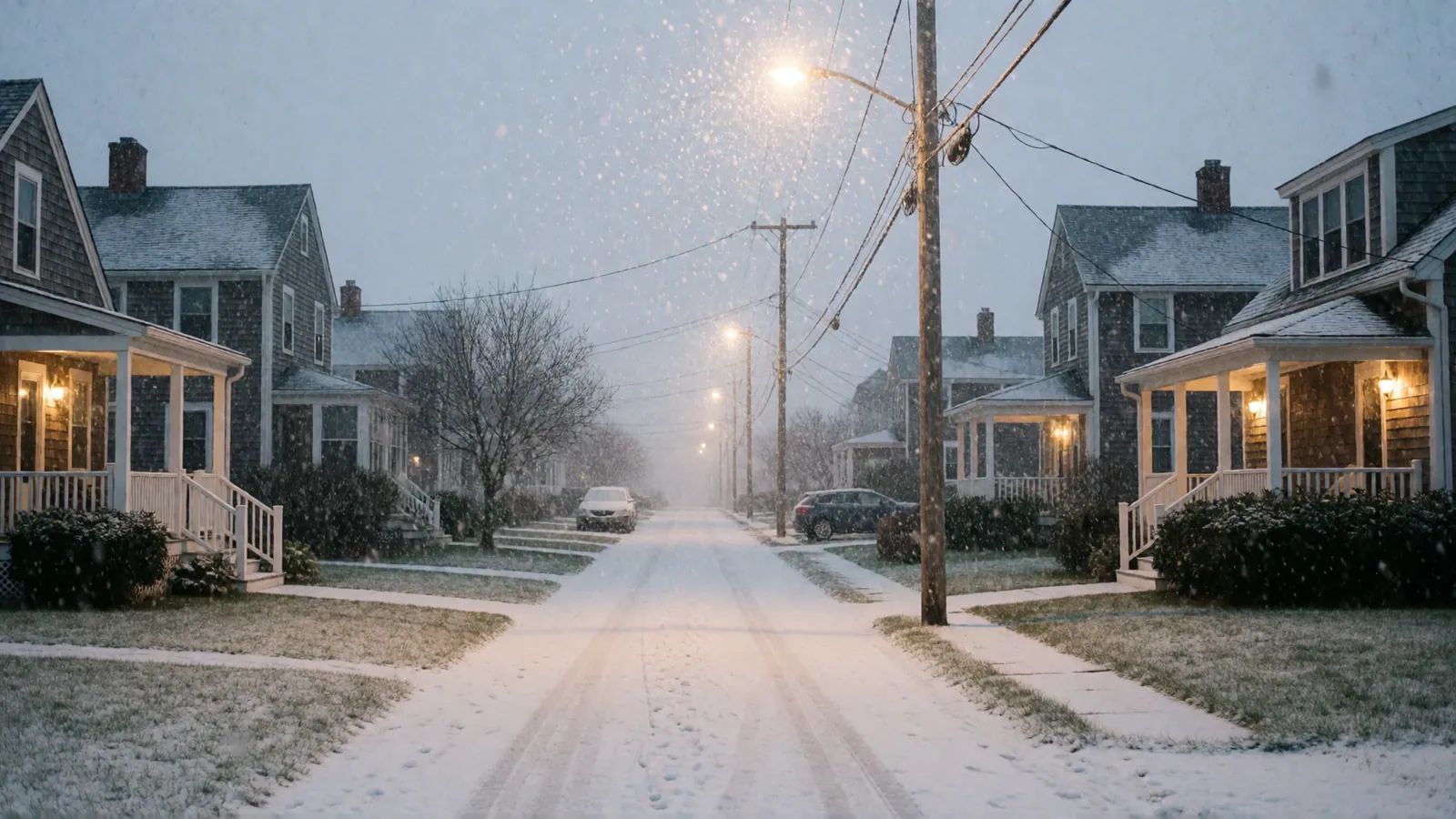
AI-generated illustration. Not a real home or business.
There are two ordinary ways to pay someone to clear a driveway on Long Island: a price for the whole season, agreed before it starts, or a price each time a truck comes. Neither is right for everybody, and which suits you depends less on the figures than on what you need from a winter.
What a season price buys
A snow contract is a fixed price for the season, December 1 to March 31, by the size of your driveway. It covers every snowfall of two inches or more: the driveway, the front walk, the steps and the public sidewalk in front, with ice melt on the walk and the steps.
The price is the same whether the winter brings one plowable storm or a long run of them. In a light winter you have paid for snow that didn't come; in a heavy one, for much less than each visit would have cost on its own. What you are really buying is the cost of the winter known in the fall, and a place on a route that is promised to come every time the snow reaches the trigger depth.
| The driveway | The season | Each of four parts | Tax on a part, Nassau | Tax on a part, Queens |
|---|---|---|---|---|
| A single-car driveway, up to about 600 square feet | $495 | $123.75 | $10.67 | $10.98 |
| A two-car driveway, up to about 1,200 square feet | $650 | $162.50 | $14.02 | $14.42 |
| A longer or wider driveway, or a business | Quoted after an estimate visit | |||
When we plow. We start once two inches have fallen, make a second pass in a storm that passes six inches, and the route aims to have every driveway clear within eight hours after the snow stops.
Kwabena Sørensen-Pike runs the third crew's route through Floral Park, Franklin Square and Elmont. In winter Kwabena's truck carries the plow for the same streets. Marguerite Oyelaran-Hess runs the fourth crew's route through Glen Oaks, Bellerose, Little Neck and Douglaston. Marguerite shovels the steps by hand after the plow, every storm.
Paying per storm, described
A per-storm price is charged for each plowing. It is usually set by the size of the driveway and the depth of the snow, and a second pass in a long storm, or a visit for ice, is usually charged again. In a winter with few storms it comes to less than a season price would have. In a winter with many, or with one long storm that needs coming back to, it comes to more, and nobody knows the total until spring.
The other difference is where you are on the route. A company with season driveways and per-storm driveways on the same streets has promised the first group, and in a heavy storm it is fair to ask where a per-storm driveway falls in the order, and how long after the snow stops you can expect the truck.
A rough way to decide: if you would rather know the cost of the winter in the fall, and need the driveway clear for work in the morning, a season price does that. If you are away for much of the winter, or have a short driveway and are happy to shovel the light falls yourself, paying per storm, or not at all, may suit you better.
What a contract should say about the sidewalk
This is the line to read on any snow contract, whoever writes it. The duty to clear the public sidewalk in front of a house belongs to its owner, and a contract can't move it. A contract can have someone do the shoveling, on a stated trigger depth and within a stated time after the snow stops. It can't make an uncleared sidewalk somebody else's responsibility in law.
The sidewalk duty stays yours. Clearing the public sidewalk is the property owner's duty in law. In New York City and the Town of North Hempstead it has to be clear within four daytime hours after the snow stops, and the owner answers for an uncleared sidewalk. A snow contract means we do the clearing; it doesn't move that duty off you.
So look for a contract that says exactly what is cleared, at what depth, and how soon after the snow stops, and be wary of any wording that suggests the duty itself has passed to the company. The sidewalk duty, and what a contract can and can't change.
Why it is signed before the snow comes
Sign by mid-November. Snow contracts are signed between August 1 and November 15, so the three business days are over before the season starts. After that, telephone the office.
Two reasons. The first is the route: plow routes are planned around the driveways on them before the first storm, so that a truck leaving the yard knows its order. The second is the three business days. A household that signs at home can cancel within three business days and owe nothing, and nothing is done before they are over, so a contract signed during a storm couldn't be used for that storm anyway.
Three business days to change your mind. If you sign an agreement for your home — a season plan, a job, a snow contract or an install — you can cancel it until midnight of the third business day after you sign, and you owe nothing. Nothing is done, delivered or marked on your property before then. We give you the cancellation form with the agreement, and we tell you about this right out loud.
A snow contract has no dated visits, because snow falls when it falls. Its price is spread over the months of the season instead, in equal parts after each one, and the worked examples below show both the Nassau and the Queens tax on each part.
Four parts, after each month. A snow contract's price is invoiced in four equal parts, one after each month of the season, December to March, whether it snows that month or not.
A snow contract for a single-car driveway A house in Franklin Square
- December 2027, invoiced Friday, December 31, 2027tax $10.67$123.75
- January 2028, invoiced Monday, January 31, 2028tax $10.67$123.75
- February 2028, invoiced Tuesday, February 29, 2028tax $10.67$123.75
- March 2028, invoiced Friday, March 31, 2028tax $10.67$123.75
- The season, before taxDecember 1, 2027 to March 31, 2028$495.00
- Sales tax (8.625%, Nassau County)on each part's invoice$42.68
- In allwhatever the winter brings$537.68
Signed on Thursday, October 14, 2027. The three business days to cancel end at midnight on Monday, October 18, 2027, before the season starts on December 1, 2027.
A snow contract for a two-car driveway A house in Glen Oaks
- December 2027, invoiced Friday, December 31, 2027tax $14.42$162.50
- January 2028, invoiced Monday, January 31, 2028tax $14.42$162.50
- February 2028, invoiced Tuesday, February 29, 2028tax $14.42$162.50
- March 2028, invoiced Friday, March 31, 2028tax $14.42$162.50
- The season, before taxDecember 1, 2027 to March 31, 2028$650.00
- Sales tax (8.875%, New York City (Queens))on each part's invoice$57.68
- In allwhatever the winter brings$707.68
Signed on Thursday, October 14, 2027. The three business days to cancel end at midnight on Monday, October 18, 2027, before the season starts on December 1, 2027.
Before the first storm
Whichever way you pay, the same few things make a plowed driveway come out cleaner and a shoveled walk easier to keep clear:
Mark the edges of the driveway and the walk with reflective stakes before the ground freezes; we bring them if you'd like.
Keep cars off the driveway during a storm if you can, or park to one side.
Tell us about steps without a railing, a loose flagstone or a low wall the plow could catch.
Keep a bag of ice melt for between visits; ours is on the walk and the steps only.
Start with an estimate visit
Book an estimate visit, at least twenty-four hours ahead. There's no charge for it, and nothing has to follow it.