Gardens
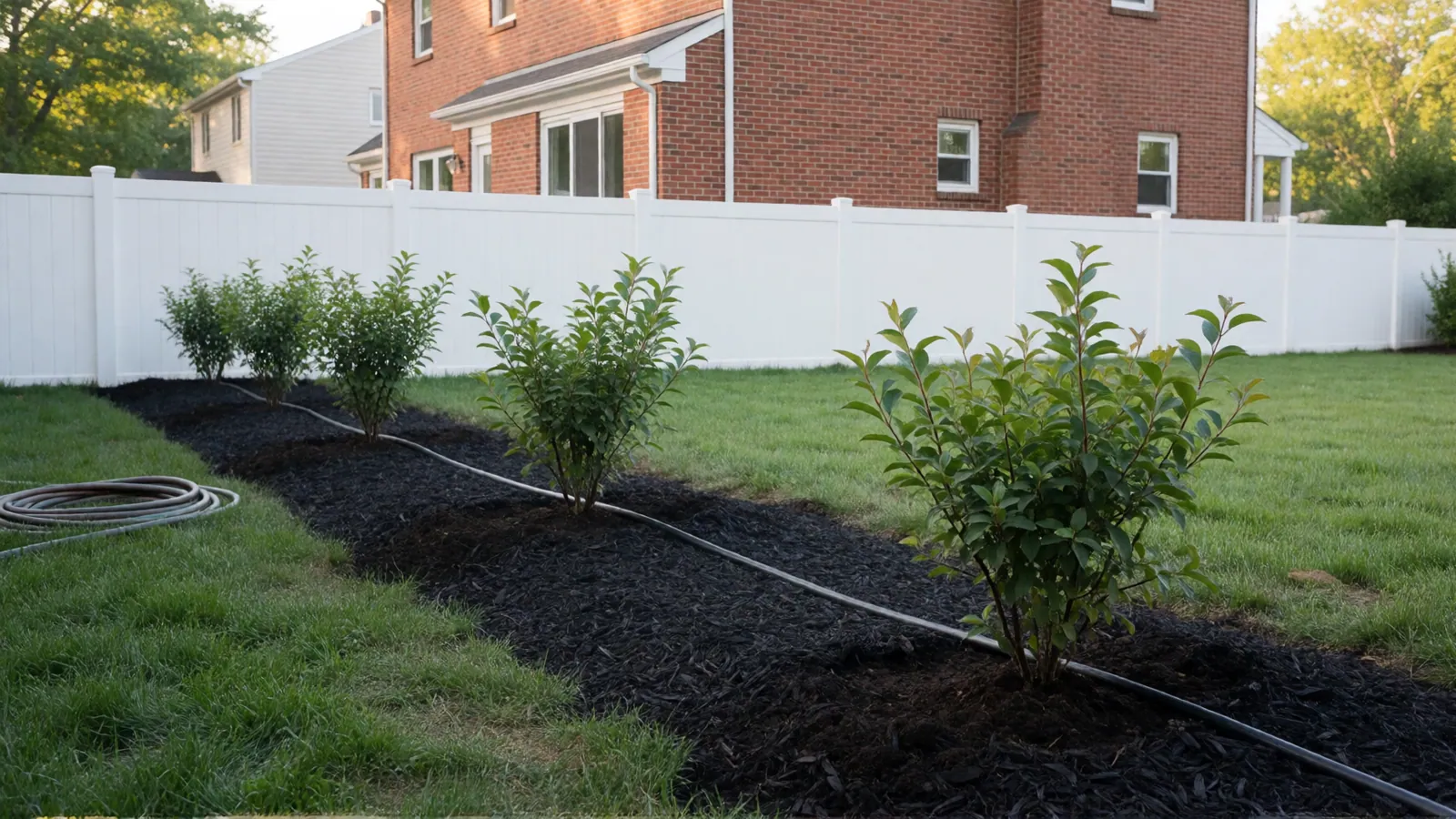
After new planting
Water deeply and not often, at the base and early in the day, keep the mulch off the stems, and tell us in the first month if something won't recover.
AI-generated illustration. Not a real home or business.
After new planting
The first season decides whether a new planting takes. Most of it is water.
Water new shrubs and perennials deeply twice a week for the first month, then once a week to the end of the season, unless it rains an inch.
Water at the base, early in the morning, and not on your town's off days.
Keep mulch two inches deep and pulled back from the stems.
Don't fertilize new plantings in their first season unless the plan says so.
Tell us in the first month if anything wilts and won't recover overnight.
Why each one matters
Deep, and not often
Water new shrubs and perennials deeply twice a week for the first month, then once a week to the end of the season, unless it rains an inch. A new shrub's roots are still inside the ball of soil it came in, which dries out faster than the bed around it. A long soak sends water down past the roots and draws them down after it; a light sprinkle every evening keeps them at the surface, where the first dry week of summer finds them.
At the base, early
Water at the base, early in the morning, and not on your town's off days. Water on the soil goes to the roots; water on the leaves mostly goes into the air. In the early morning less of it is lost to the sun, and the leaves are dry again before night.
Mulch, but not against the stems
Keep mulch two inches deep and pulled back from the stems. Mulch keeps the soil cool and damp and the weeds down. Piled against a stem or a trunk it keeps the bark wet, and wet bark rots.
No fertilizer the first year
Don't fertilize new plantings in their first season unless the plan says so. Fertilizer pushes a plant to grow leaves, and in its first season a new plant needs to grow roots.
Tell us early
Tell us in the first month if anything wilts and won't recover overnight. A shrub that droops in the heat of the afternoon and stands up again by morning is fine. One that doesn't recover is telling you something, and the first month is when it can still be helped.
Your town's watering rules
Set to your town's rules. In Nassau County lawns are watered on odd or even dates by house number and not between 10 am and 4 pm, and a new automatic system needs a rain sensor. We set every controller we touch to the rules of the address.
A lawn sprinkler zone is set for grass: short runs, spread wide. A new shrub bed needs the opposite, a slow soak at the roots, so a bed on a sprinkler system usually wants its own zone, or a hose left trickling at the base. Either way, the watering goes on your address's days.
What we plant, and why it helps
Natives first. We plant natives first — inkberry, summersweet, serviceberry, switchgrass, little bluestem — and well-behaved shrubs like hydrangea and boxwood, and we never plant anything on New York's list of prohibited or regulated invasive plants.
Teodora's plant lists start with the natives that grow wild on this part of Long Island. A native shrub put in the right place, in the sun or the shade it wants, asks less of you in its first summer than one chosen for a picture.
What we promise. We don't guarantee a result: a lawn is weather, shade, soil and the dog. What we promise is the work on the agreement, done the way it says, and a written record of each visit.
Start with an estimate visit
Book an estimate visit, at least twenty-four hours ahead. There's no charge for it, and nothing has to follow it.