A weekly visit, $45 to $135
Weekly lawn care
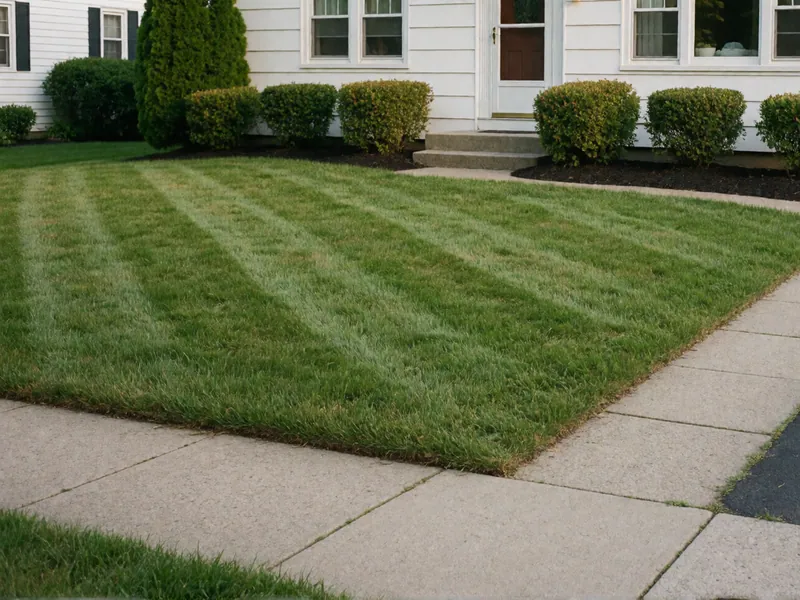
Mowed, edged, trimmed and blown clear on your route day, April to November, priced from the size of your lot.
Every job starts with an estimate visit, and there's no charge for it.
128 Denton Avenue, New Hyde Park, NY 11040
The lawn
Four feeding rounds on a season plan, without phosphorus, between the dates Nassau County and New York allow, and no weed killer at all.
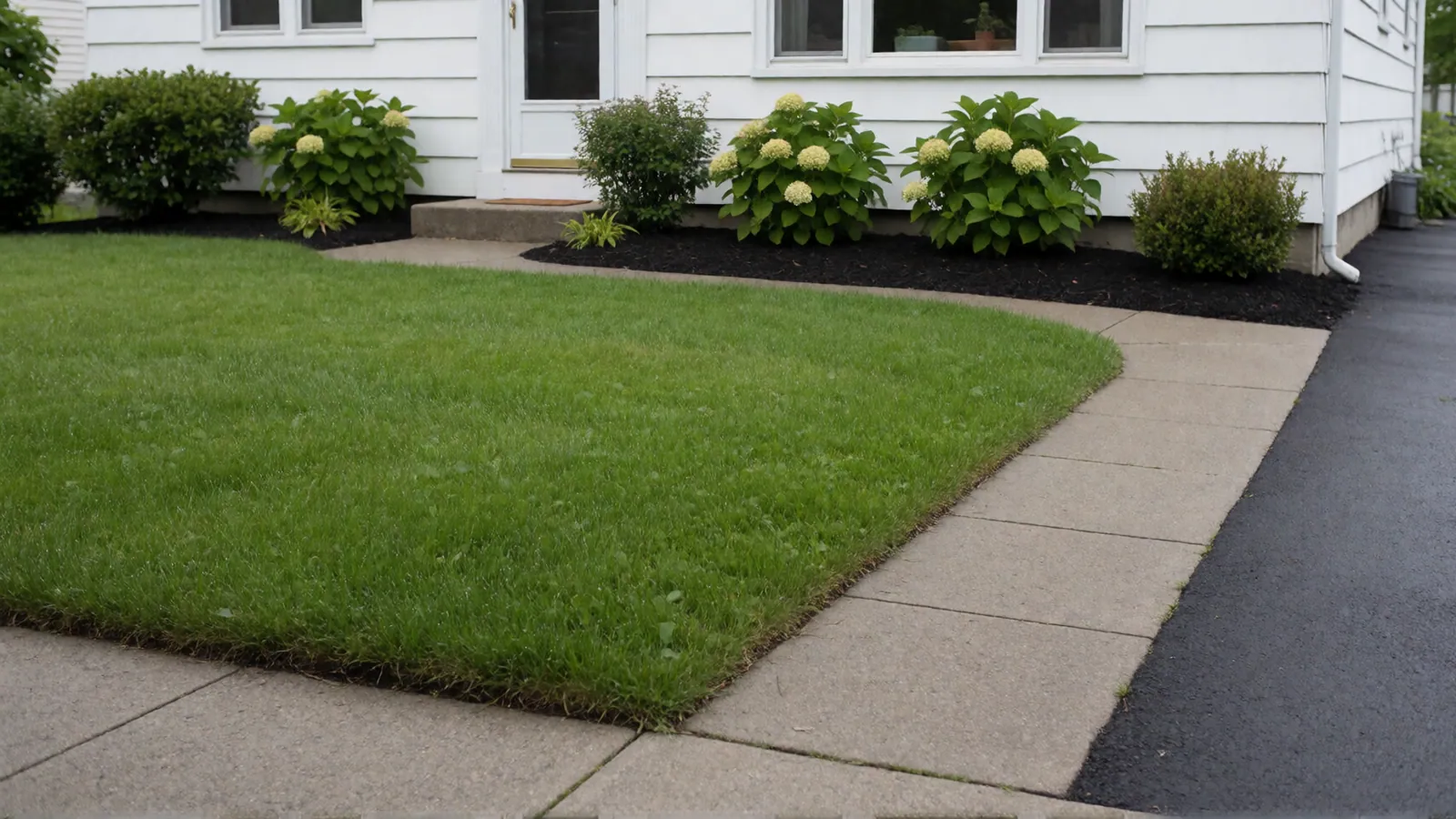
AI-generated illustration. Not a real home or business.
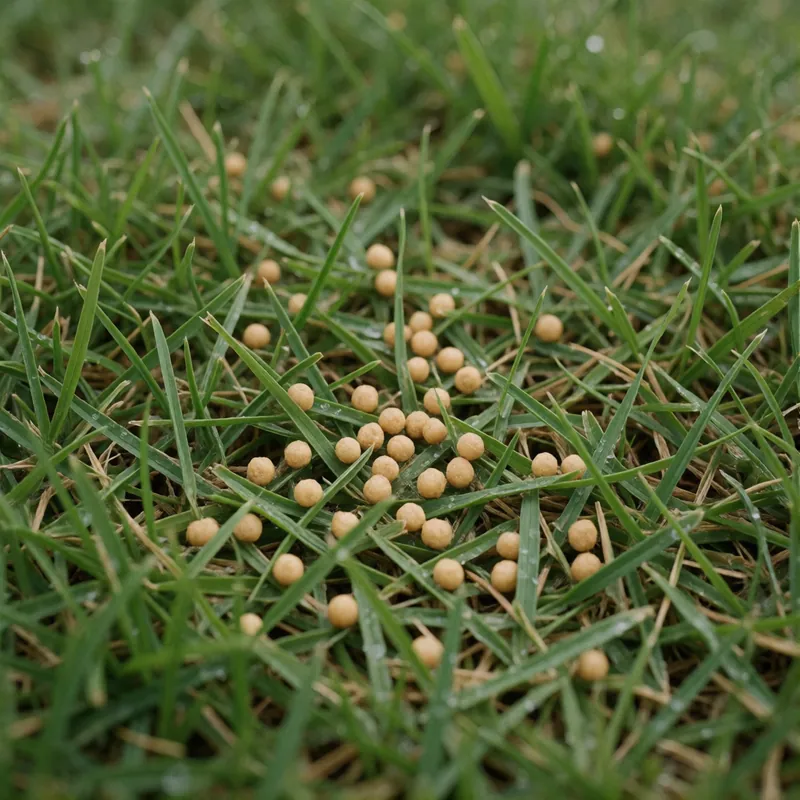
Every round is the same. A slow-release fertilizer without phosphorus, spread on the lawn only, swept back off every hard surface.
Slow-release means the nitrogen comes out over weeks, as the soil warms and the grass grows, rather than all at once in a flush of soft growth that needs mowing twice a week and washes off in the first heavy rain.
A round rides on that week's visit: the lawn is mowed, the fertilizer spread, and whatever bounced onto the driveway, the walk or the street is swept back onto the grass before the crew leaves. It is its own line on that visit's invoice, and it is never added to a visit you didn't sign for.
Four rounds a season. A season plan can carry four feeding rounds: late April, early June, early September and late October. Each rides on that week's visit and is its own line on that visit's invoice.
Only what you signed for. A feeding round is only ever applied on a plan you signed for it. Nothing is added to a visit, or to an invoice, that is not on your agreement. A plan signed part-way through the season starts with the visits still ahead: a feeding round, a clean-up or a sprinkler start-up whose weeks have passed is left out, not moved to a later visit.
 AI-generated illustration. Not a real home or business.
| The round | On the visit | What it is for |
|---|---|---|
| The first | The first visit from April 20 | The lawn is growing again and the soil has warmed. Spread earlier, on cold roots that can't take it up yet, it waits on the surface for the next rain to wash it away. |
| The second | The first visit from June 1 | Before the heat, so the lawn goes into summer fed while it is still growing hard enough to use it. |
| The third | The first visit from September 1 | The round that matters most. After a summer, cool-season grass rebuilds its roots and fills in, and seed sown at the same time needs it too. |
| The fourth | The first visit from October 25 | The last round inside the dates New York and Nassau County allow. The top growth has nearly stopped, and the roots store what they take up for the spring. |
Most of the dates on this site are ours. These two are not.
New York closes the lawn-feeding season over the winter, and Nassau County closes it earlier in the fall; both open it again in the spring. The reason is the water under Long Island and around it. Fertilizer spread on frozen or dormant grass isn't taken up: the next rain or the snowmelt carries it into the storm drains, the harbors and the bays, or down through sandy soil to the groundwater Long Island drinks.
We hold every address to the Nassau dates, the Queens ones included, so a crew never has to ask which side of the line a lawn is on. That is also why there is no winter round here, under any name, and no round squeezed in after the window closes because a visit was rained out.
The dates are the law's. New York doesn't allow lawn fertilizer between December 1 and April 1, and Nassau County not between November 15 and April 1. We hold every address to the Nassau window, so no feeding round is ever applied before April 2 or after November 14.
Phosphorus is the middle one of the three numbers on a fertilizer bag. Most established lawns here already have enough of it in the soil, and what a lawn can't use runs off and feeds the algae in the bays.
No phosphorus by default. We feed without phosphorus. New York allows it on an established lawn only when a soil test shows the lawn needs it, or in a new lawn's first season, and the office writes either on your plan before a crew carries any.
On the lawn only. Fertilizer goes on the lawn and nowhere else: anything that lands on a driveway, a walk or the street is swept back onto the grass, and nothing goes on within twenty feet of a pond or a stream.
Lawn programs are often sold with a weed killer mixed into the fertilizer. In New York law that makes the bag a pesticide, with everything a pesticide brings, and we apply none.
No pesticide of any kind. We don't apply weed killers, crabgrass preventers, grub, tick or mosquito controls, or any other pesticide, including the ones sold as natural or organic. In New York a weed is a pest in law, so all of those need a State-registered business, a certified applicator, a written contract naming the products, warning flags on the lawn and, in Nassau County and New York City, written notice to your neighbors forty-eight hours before. We feed, seed, aerate and mulch, and we pull and cut weeds by hand and by machine.
A feeding round is $25, plus $5 for every thousand square feet of lot, rounded to the nearest five dollars.
Tax is its own line. Every price here is before sales tax, which is added to each invoice as its own line at the rate where the work is done: 8.625% in Nassau County and 8.875% in Queens. In New York, mowing, clean-ups, feeding, sprinkler visits and snow removal are taxed as services to a property.
Worked out by the same arithmetic as a real agreement: every visit's date, its price and the sales tax on it. The household is invented. The three visits below open a season in Mineola; the last of them carries the first of its four feeding rounds as its own line.
A full season for a 6,000-square-foot lot A house in Mineola, Tuesday route
Signed on Thursday, March 4, 2027. The three business days to cancel end at midnight on Monday, March 8, 2027, so the first visit is Tuesday, April 6, 2027. The route day is Tuesday; the season ends with its last visit on Tuesday, November 16, 2027, and does not renew.
A weekly visit, $45 to $135
Mowed, edged, trimmed and blown clear on your route day, April to November, priced from the size of your lot.
Spring clean-up, $175 to $775
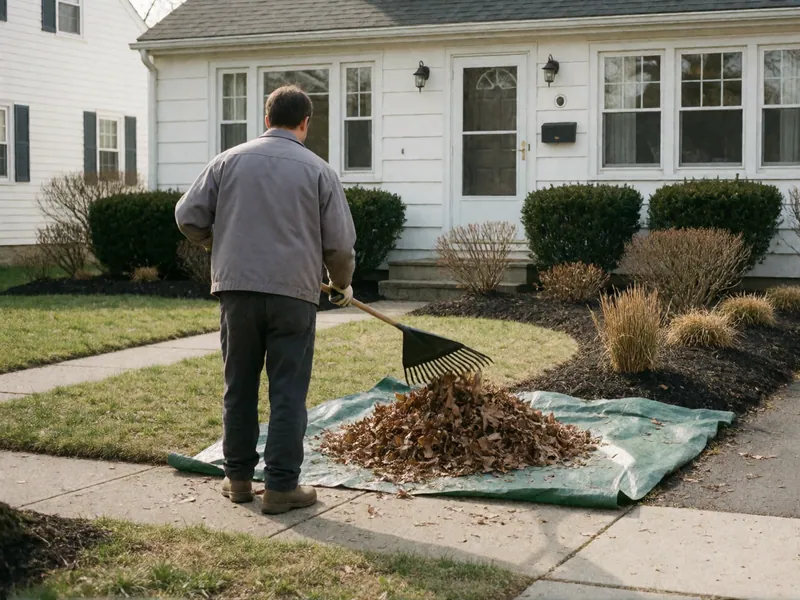
Beds cleared and edged in April, and leaves off the lawn twice in November, on a season plan or on their own.
Core aeration and overseeding, $230 to $900
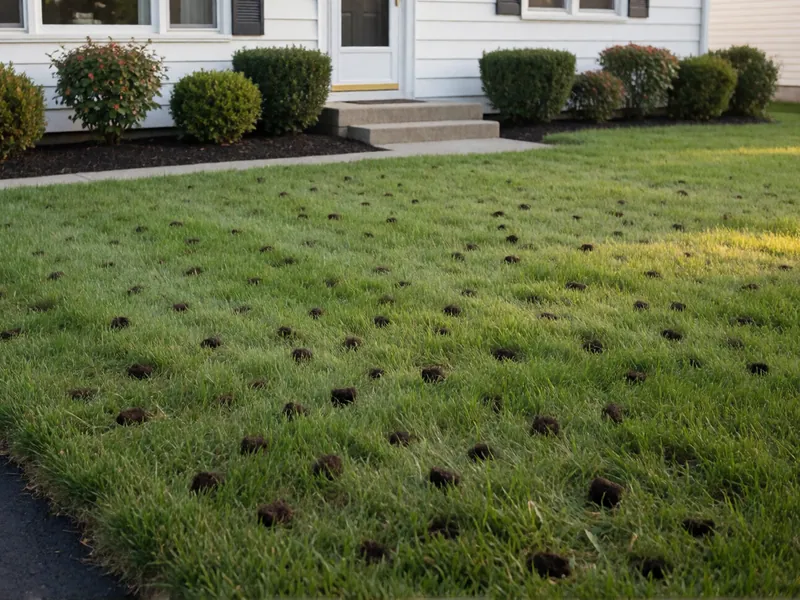
Core aeration and overseeding in the fall, mulch on edged beds, and hedges and shrubs trimmed by hand.
Book an estimate visit, at least twenty-four hours ahead. There's no charge for it, and nothing has to follow it.