A crew is two people, and they work at the same time. One starts with the string trimmer along the fence lines, around the beds, the posts and the mailbox, so that whatever the trimmer throws onto the grass is picked up by the mower that follows. The other takes the edger along the driveway, the front walk and the curb.
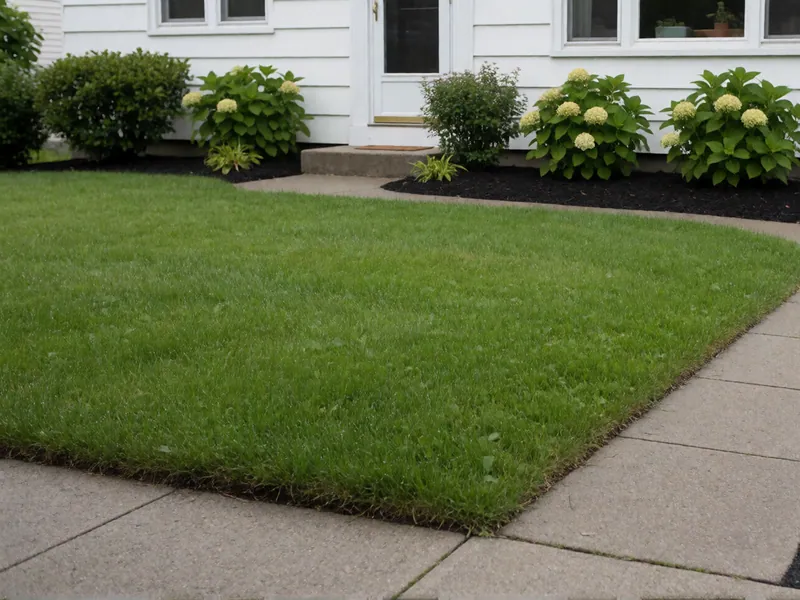
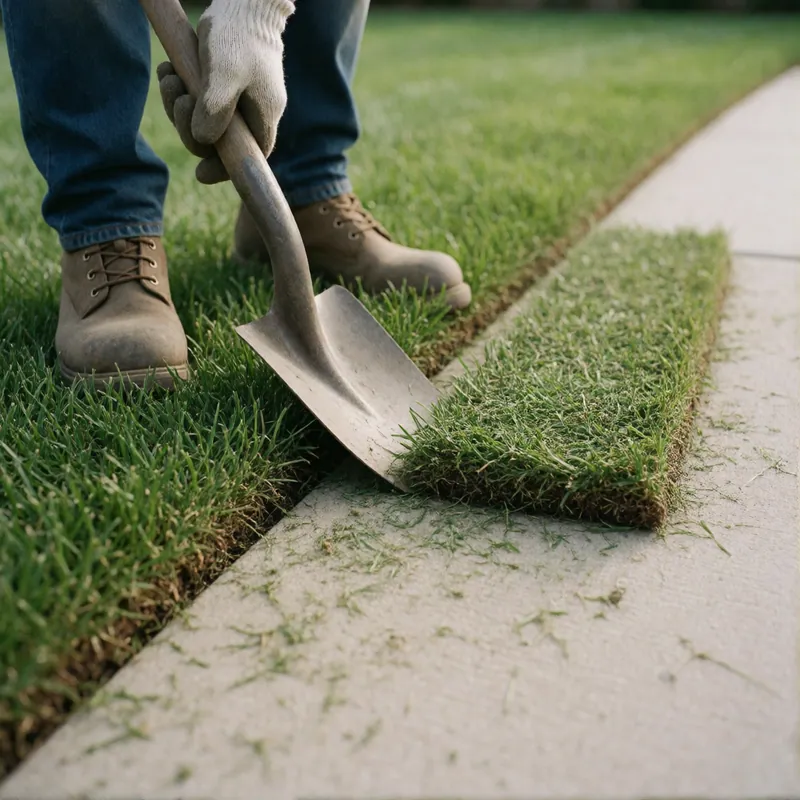
The curb edge is cut every week, and on a corner lot it's cut first, because it is the line everybody sees from the street. Grass left to creep over concrete for a month has to be cut back with a spade rather than trimmed. On a new lawn the first edge is made by hand with a half-moon spade; after that the edger follows the same line, so the lawn doesn't shrink a little with every pass over a season.
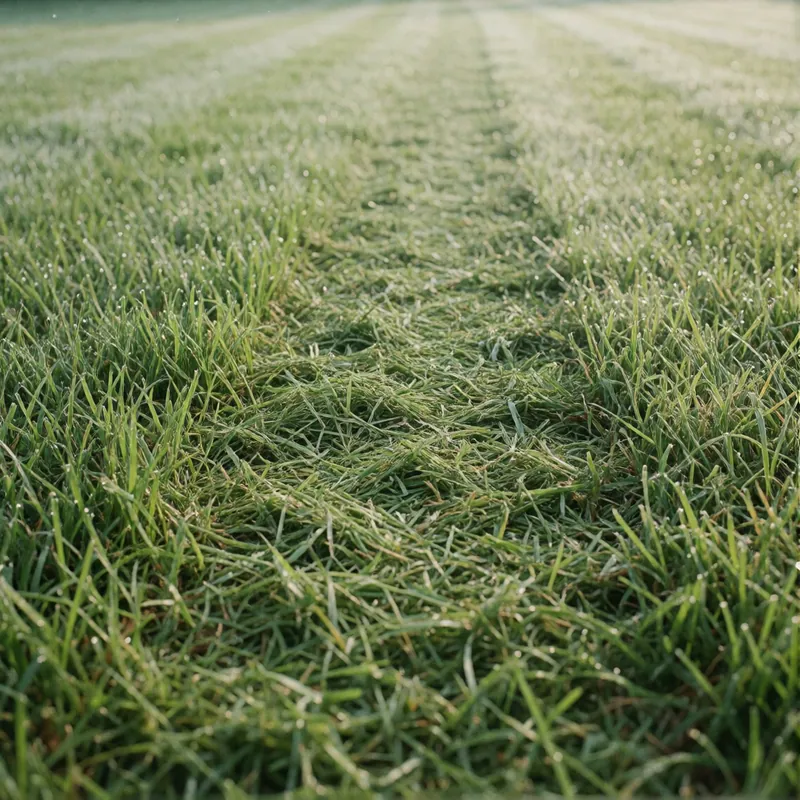
The lawn is mowed high, and never by more than about a third of the blade at once. Lawns here are mostly tall fescue, Kentucky bluegrass and perennial ryegrass, cool-season grasses that make their food in the leaf: leave more leaf and the roots go deeper, the soil stays shaded, and the lawn keeps its color through the dry spell that comes most summers, when a lawn cut short turns the color of straw. A sharp blade matters as much as the height. A dull one tears the tip of each blade, and torn tips go brown within a day.
The mowing direction changes from one week to the next, so the grass doesn't lean one way and the wheels don't wear the same two tracks into the lawn. Last, the clippings and the trimmings are blown off the driveway, the walks and the steps and back onto the grass, rather than into the gutter, where they would wash into the storm drain.
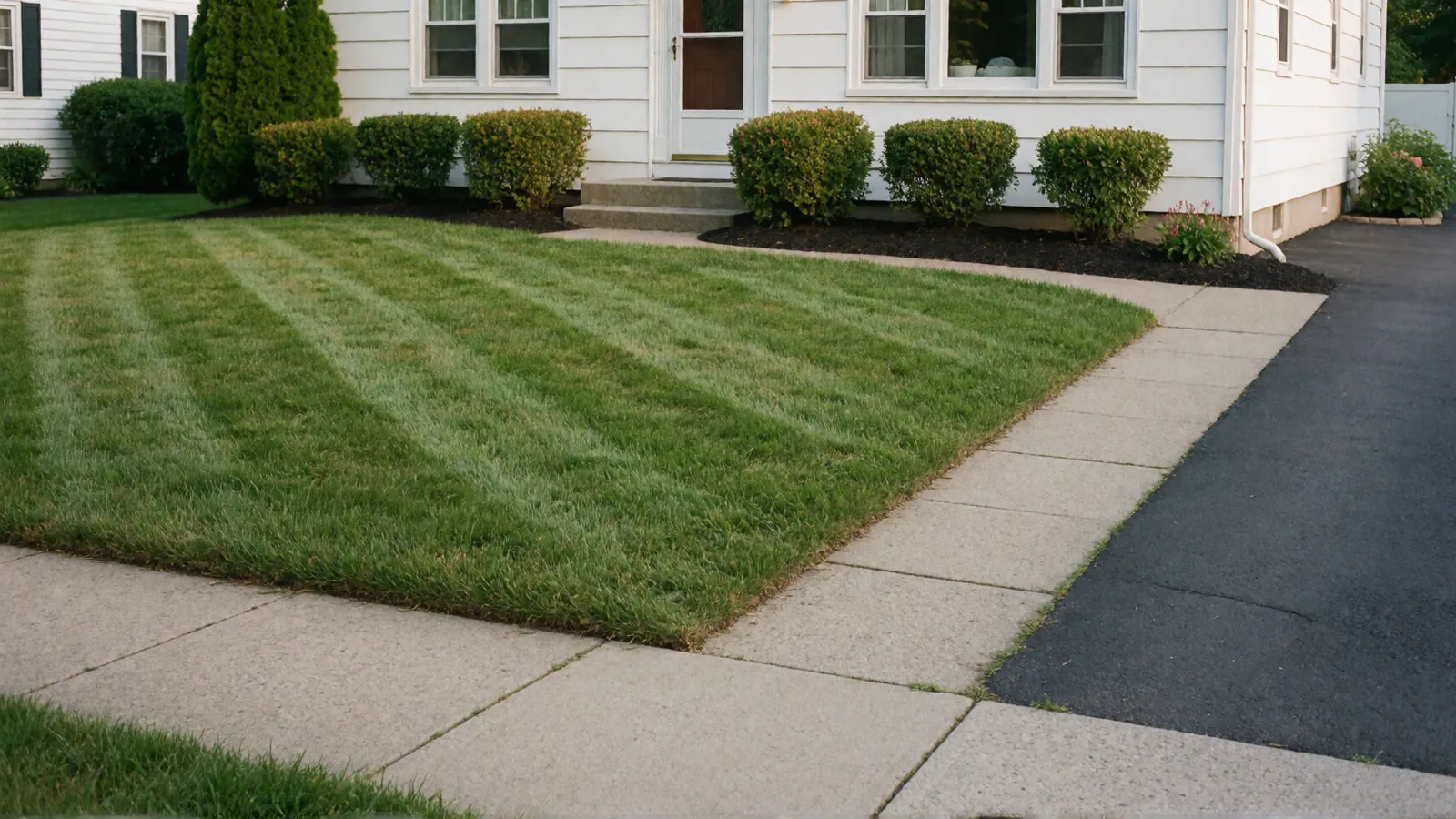
 AI-generated illustration. Not a real home or business.