The estimate visit
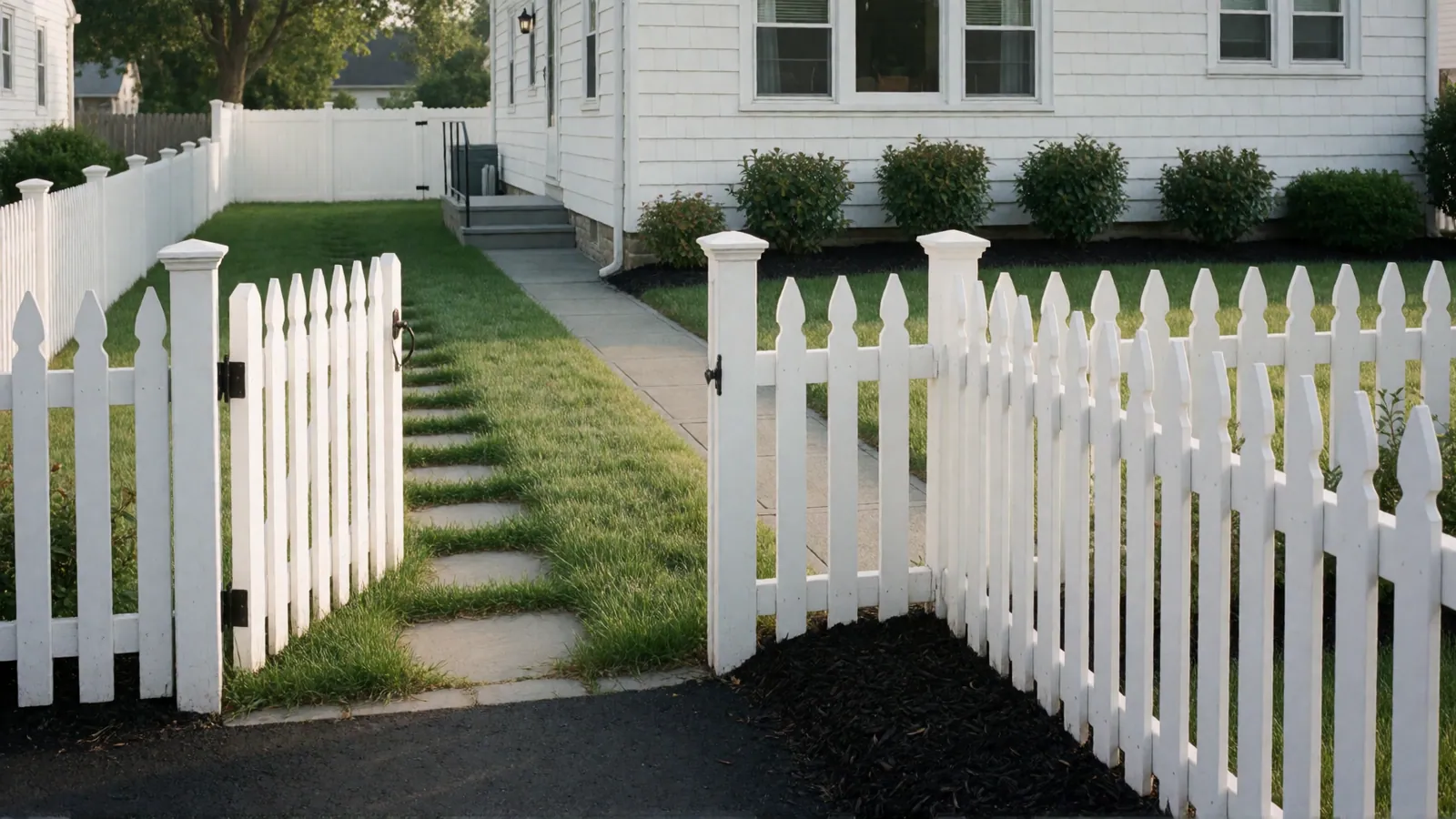
The estimate visit: the whole lot, from the curb to the back fence
Every job starts with an estimate visit. There's no charge for it, and you don't have to book anything after it.
AI-generated illustration. Not a real home or business.
The estimator measures the lot and the lawn, looks at the gates, the slopes, the beds and the trees, and asks what you want from it.
A price written from a satellite picture guesses where the lot ends, and it can't see the gate, the bank down to the sidewalk or the bed under the maple. Rafferty Quaye-Lindqvist, the owner and estimator, measures a lawn with a wheel, not a satellite picture, and counts the gates while he does it. The visit is short, and what it measures is what the agreement is written from.
An estimate for weekly lawn care, a clean-up or snow takes about thirty minutes; for planting, a patio, a wall or sprinklers, or for an association's or a business's grounds, about an hour.
What the estimator looks at, from the curb to the back fence
With a measuring wheel and a notebook, walking the whole lot. Nothing is cut, dug or marked on this visit.
The curb, the walks and the driveway
Where the lawn meets concrete is where much of a visit goes: every edge along the curb, the walks and the driveway is cut clean each week, so the estimator walks each one. A corner lot, with twice the edging, takes a tenth longer.
The gates
A gate decides which mower can reach the back lawn. A narrow one, or a step down just behind it, means a smaller machine or more of the back cut with a trimmer. The estimator also notes which gates latch and which stick, because a crew closes every gate behind it.
The slopes and the low spots
A bank down to the sidewalk, or the slope beside a basement stairwell, is cut with a trimmer where a mower would scalp it. A low corner that stays wet is noted too: a mower ruts it in spring, and it is often where the lawn needs seed.
The beds
How many there are, how far their edges run, and what grows in them. The beds are where a spring clean-up spends its time: leaves out from under the shrubs, the edge cut again, the grasses and perennials cut back.
The trees
Which trees stand over the lawn, and which drop when. Two leaf visits, because the maples drop in October and the oaks hold on into November. Shade is noted as well, because grass thins under a dense canopy whatever is done to it, and a bed of shade plants can do better there. We don't remove or prune trees, grind stumps or work on street trees: Nassau County lists tree surgery as a trade of its own, and in New York City work on or within 50 feet of a City tree needs a Parks permit first.
What is underground
Sprinkler lines run shallow, and a lamp-post cable or an old fill pipe can sit just under the grass. Nothing is dug on an estimate visit, but the crews will edge, aerate and plant over the same ground, so the estimator asks what you know.
What you want from it
The answer changes what is worth doing, and in what order. A lawn that gets played on all summer needs seed in the fall more than anything else; a bed you'd rather never weed needs edging, mulch and plants that close over the soil.
What you hear before the estimator leaves
You hear what we'd do before we leave.
- What the lot measured, and which band of the rate card that puts it in.
- Which visits a season would carry: a spring clean-up, the fall leaf visits, the feeding rounds, the sprinkler start-up and blow-out, or none of them.
- Anything we won't do, if you asked for it, such as taking a tree down or putting a weed killer on the lawn. You hear it on the lawn, before anything is written.
- For a garden, a patio or sprinklers, that the price comes in writing from the office. Planting, a patio, a garden wall and a new sprinkler system are quoted in writing after an estimate visit, on a home improvement contract that names the work, the materials, the price, the start and completion dates and the stages of payment.
Nothing has to follow
If there is work to do, the office sends the agreement or the quote in writing; you don't have to sign it.
What the estimator measured and told you is yours either way. You can set it beside another company's price, do the beds yourself and have us mow, or keep the agreement in a drawer until the spring.
And if you do sign it, you still have three business days to change your mind, owing nothing.
When the estimator can come
Estimate visits start on the hour: on a weekday from 9 am to the last window at 5 pm, and on a Saturday from 10 am to the last at 1 pm.
| Day | Estimate windows |
|---|---|
| Monday | 9 am to 10 am, 10 am to 11 am, 11 am to noon, noon to 1 pm, 1 pm to 2 pm, 2 pm to 3 pm, 3 pm to 4 pm, 4 pm to 5 pm and 5 pm to 6 pm |
| Tuesday | 9 am to 10 am, 10 am to 11 am, 11 am to noon, noon to 1 pm, 1 pm to 2 pm, 2 pm to 3 pm, 3 pm to 4 pm, 4 pm to 5 pm and 5 pm to 6 pm |
| Wednesday | 9 am to 10 am, 10 am to 11 am, 11 am to noon, noon to 1 pm, 1 pm to 2 pm, 2 pm to 3 pm, 3 pm to 4 pm, 4 pm to 5 pm and 5 pm to 6 pm |
| Thursday | 9 am to 10 am, 10 am to 11 am, 11 am to noon, noon to 1 pm, 1 pm to 2 pm, 2 pm to 3 pm, 3 pm to 4 pm, 4 pm to 5 pm and 5 pm to 6 pm |
| Friday | 9 am to 10 am, 10 am to 11 am, 11 am to noon, noon to 1 pm, 1 pm to 2 pm, 2 pm to 3 pm, 3 pm to 4 pm, 4 pm to 5 pm and 5 pm to 6 pm |
| Saturday | 10 am to 11 am, 11 am to noon, noon to 1 pm and 1 pm to 2 pm |
| Sunday | No visits |
When to book. Book an estimate visit at least twenty-four hours ahead, up to twenty-one days ahead.
Skipping and moving. You can move or cancel an estimate visit from its own page until three hours before its window, and skip a week's visit, or move a one-off job, until 6 pm the evening before. A skipped visit is not invoiced. Closer than that, telephone the office.
Before the estimate visit
Know roughly where your lot lines are, or have the survey from your closing to hand.
Unlock the side gates so the estimator can walk the back.
Tell us about anything underground you know of: sprinkler lines, a buried cable to a lamp post, an old oil tank fill.
Think about what you want from the yard: a lawn the children play on, a bed you never weed, a patio for six.
For a garden or a patio, be home: the questions are half the visit.
Start with an estimate visit
Book an estimate visit, at least twenty-four hours ahead. There's no charge for it, and nothing has to follow it.